-

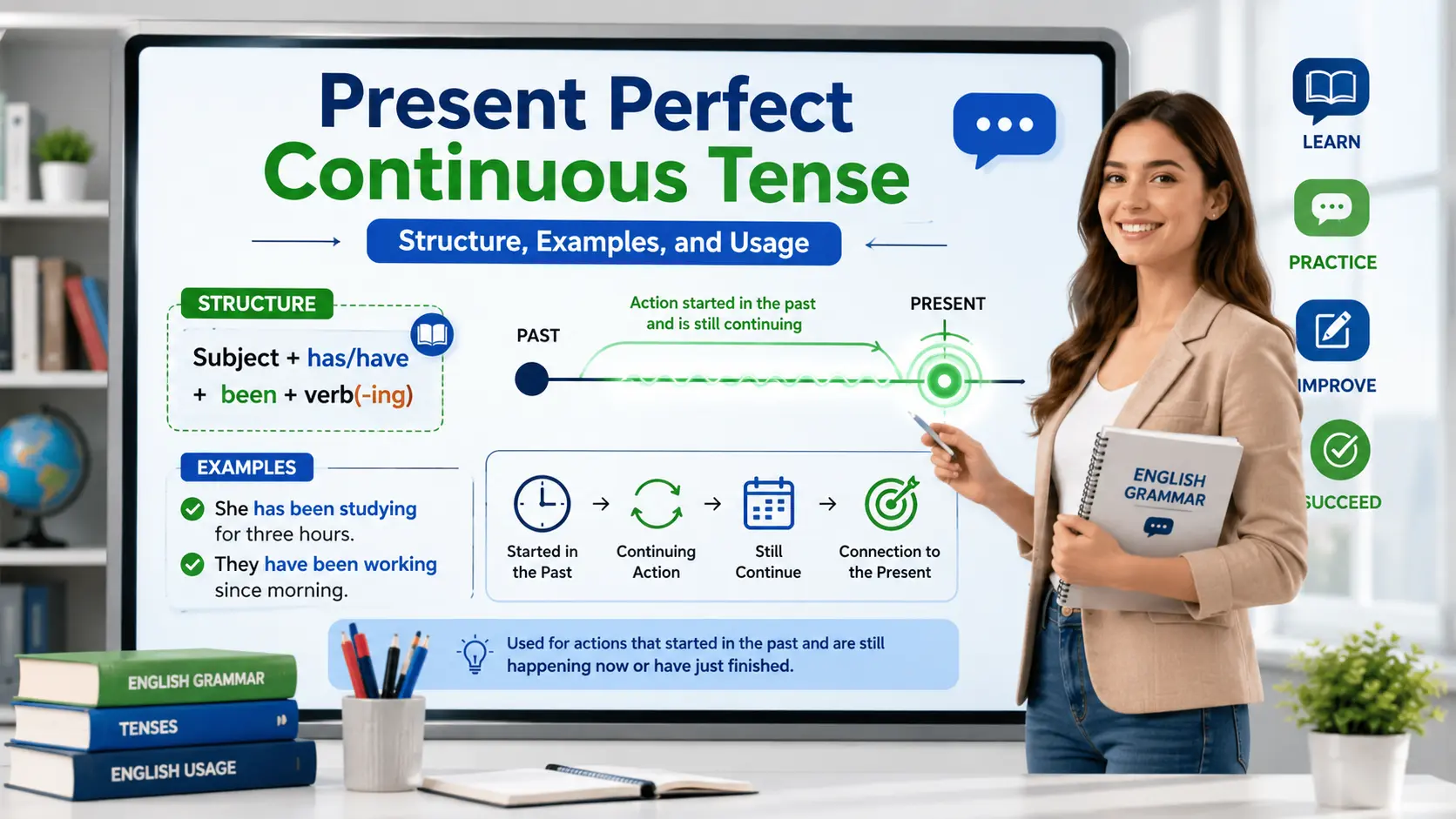
Future Perfect Continuous Tense: Meaning, Uses, and Easy Examples
Learning English grammar can sometimes feel confusing, especially when you come across long tense names like the Future Perfect Continuous Tense. At first glance, the name may sound difficult, but once you understand its structure and purpose, it becomes much easier to use in everyday communication. I remember the first time I saw this tense…
-
Future Perfect Tense: Rules, Uses, and Examples
Introduction The Future Perfect Tense is used to describe an action that will be completed before a certain time or event in the future. It helps show that something will already be finished at a specific point in time. This tense is very useful in both writing and speaking because it allows you to talk…
-
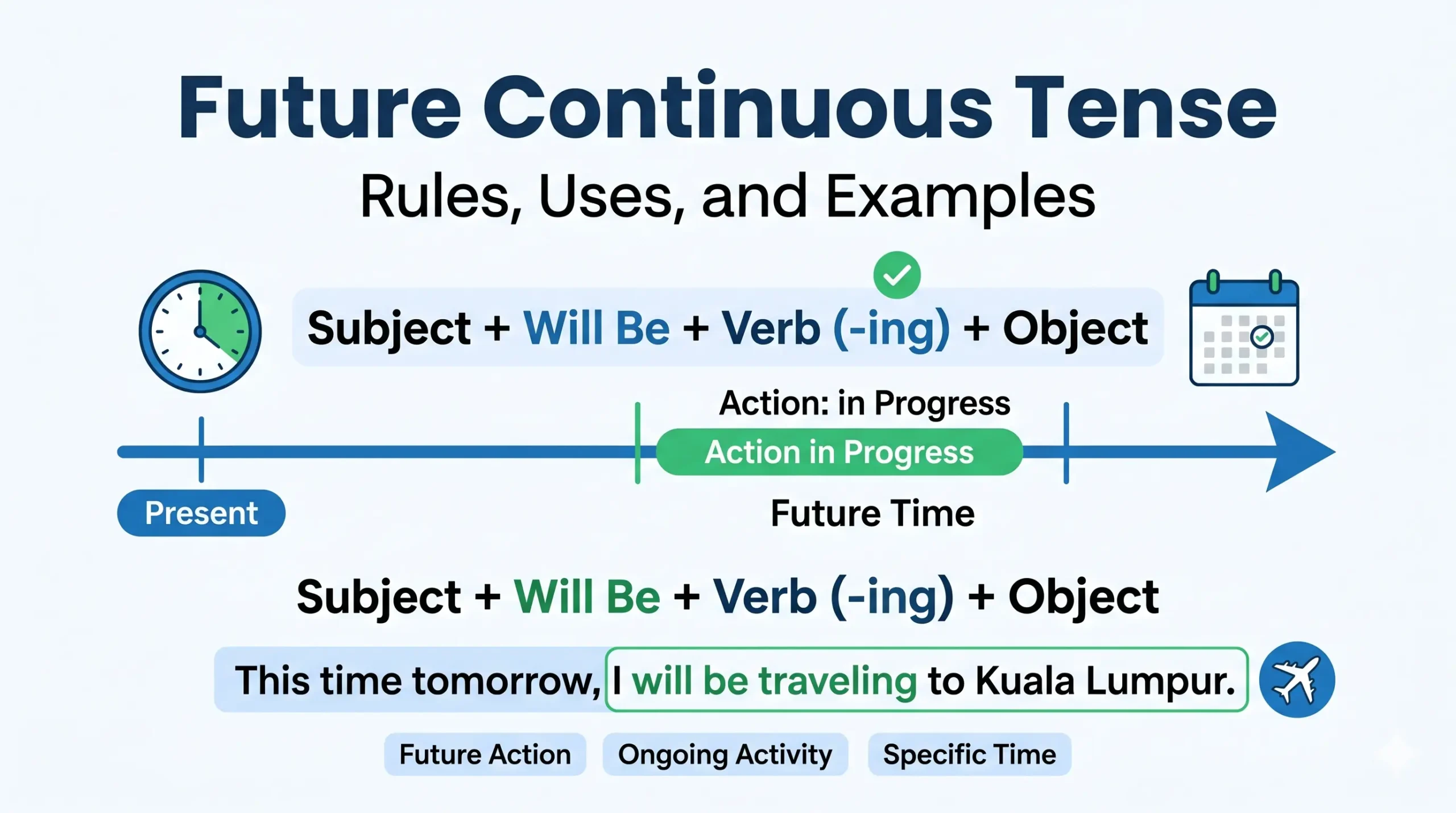
Future Continuous Tense: Rules, Uses, and Examples
Introduction The Future Continuous Tense is used to describe an action that will be happening at a specific time in the future. It is one of the most useful English grammar tenses because it helps speakers talk about future plans, ongoing activities, and predictions naturally. In everyday conversations, native English speakers often use the future…
-
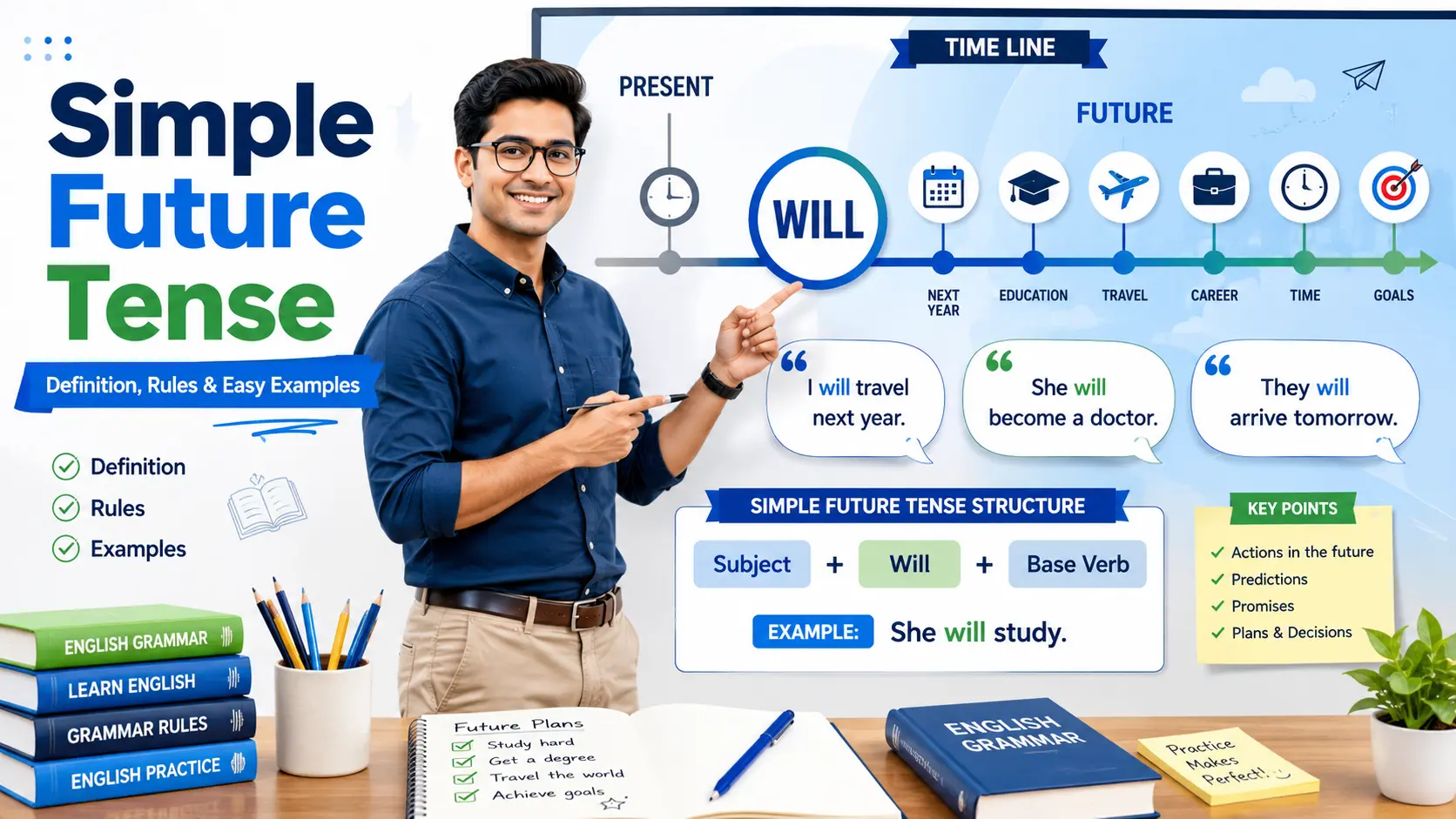
Simple Future Tense: Definition, Rules, and Easy Examples
Introduction The English Grammar Simple Future Tense is used to describe actions that will happen in the future. It helps us talk about plans, predictions, promises, decisions, and future events. This tense is very important in daily communication because we often speak about what we will do tomorrow, next week, or in the future. Think…