-

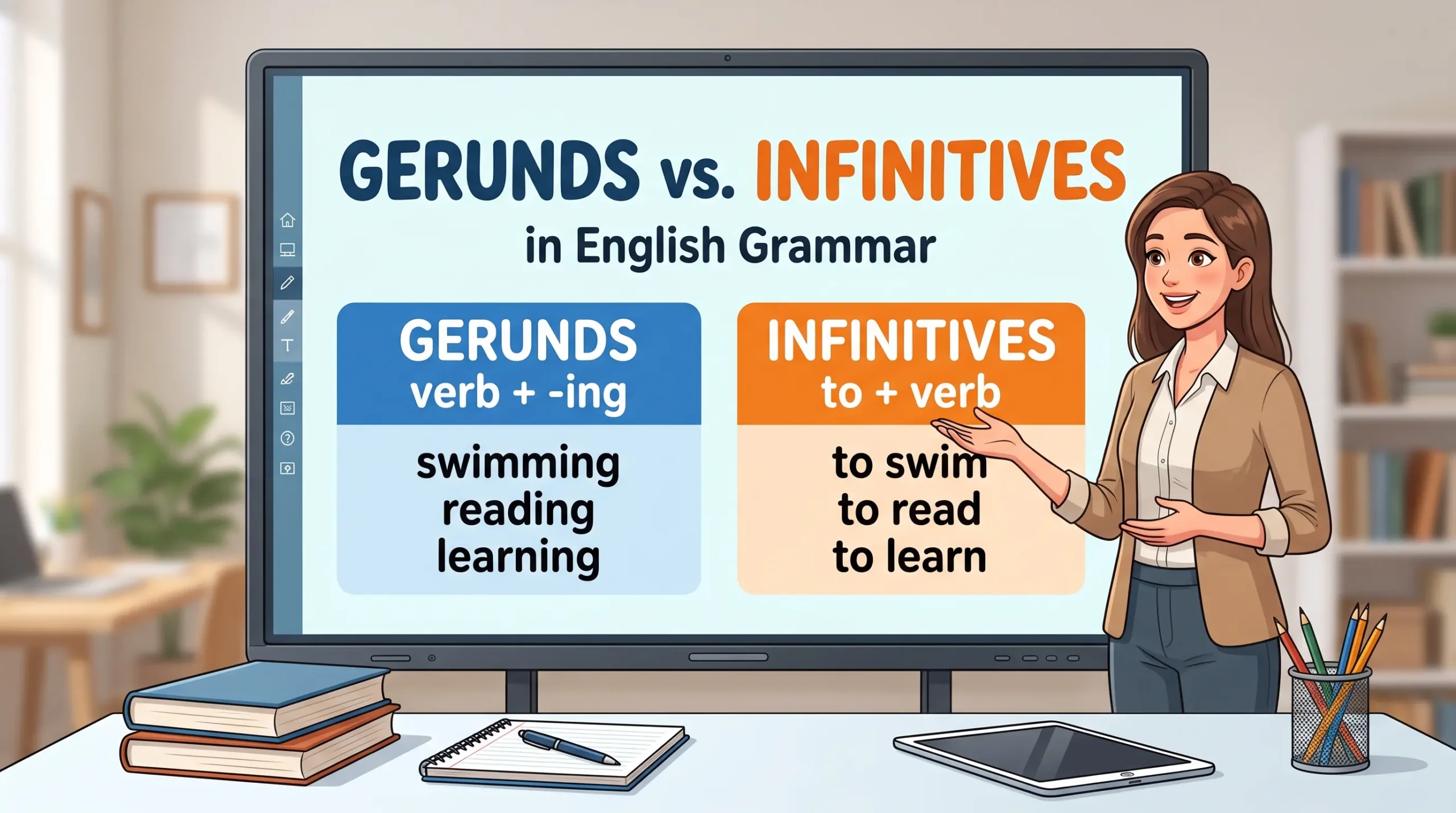
Gerunds vs. Infinitives in English Grammar: Rules, Meanings, and Complete Guide
Gerunds vs. Infinitives in English grammar represent one of the most critical milestones in language learning. Understanding the difference between gerunds (verb + -ing) and infinitives (to + verb) is essential for clear communication. While both forms originate from verbs and function as nouns or complements within sentences, choosing between a gerund and an infinitive…
-
Punctuation and Capitalization Rules: A Complete Guide
Mastering punctuation and capitalization rules is essential for clear, effective English writing. Punctuation marks serve as the directional signs of a sentence, indicating pauses, structural breaks, and relationships between ideas. Meanwhile, capital letters show where complete thoughts begin and highlight proper nouns like names, places, and official titles. Using punctuation incorrectly can alter the meaning…
-
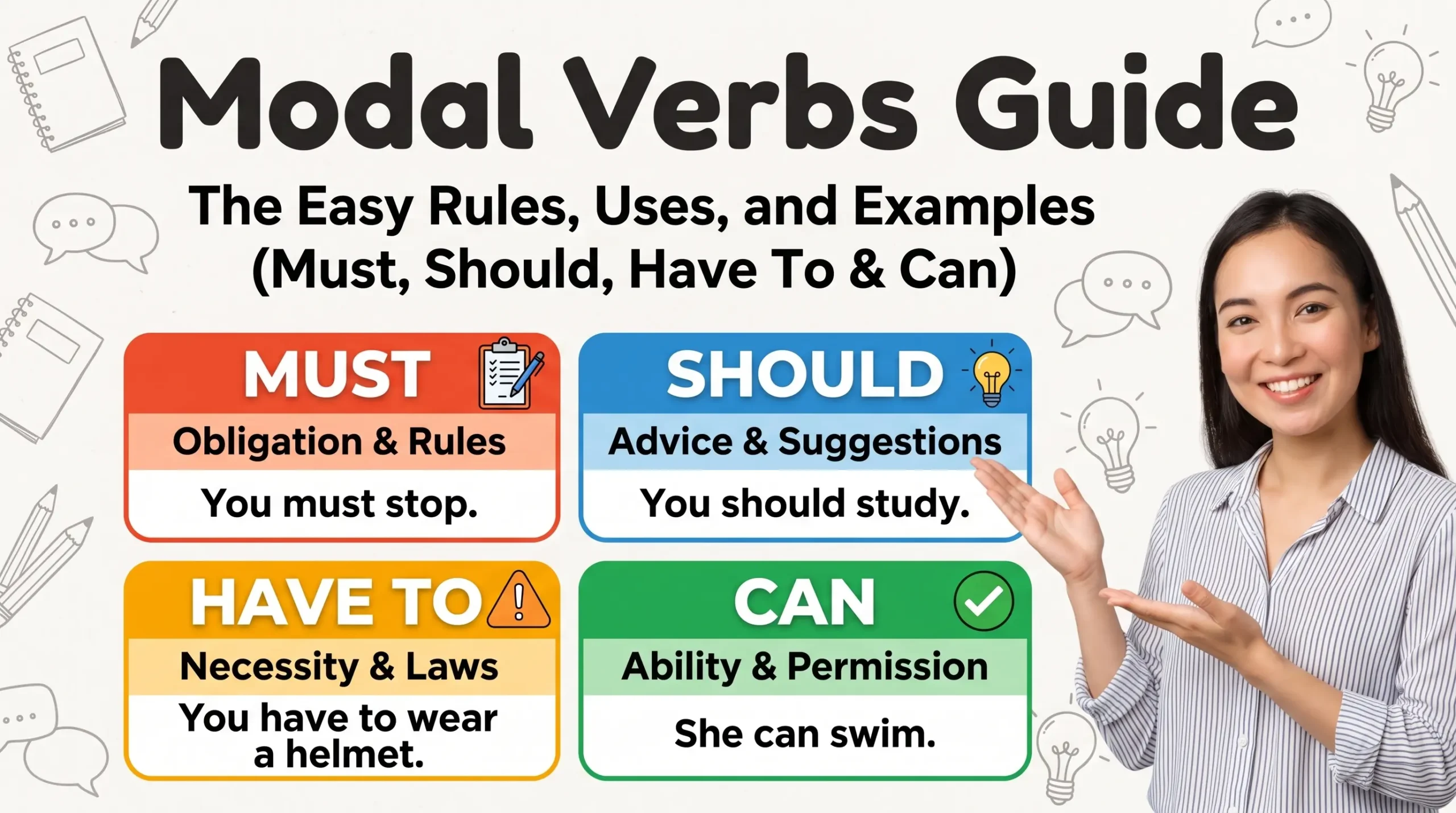
Modal Verbs Guide: How to Use Must, Should, Have To & Can (With Examples)
Introduction to Modal Verbs Welcome to our complete Modal Verbs Guide, where we break down how auxiliary verbs express obligation, advice, necessity, and capability in English. Unlike standard main verbs or basic helping verbs, modal auxiliary’s verbs in English grammar do not describe direct physical or mental actions by themselves. Instead, they modify the main…
-
Subject-Verb Agreement Rules and Regulations
Introduction to Subject-Verb Agreement Rules and Regulations Subject-verb agreement is one of the most important rules in English grammar. It means the verb must match the subject in number (singular or plural) and person. A singular subject takes a singular verb, while a plural subject takes a plural verb. Let’s be honest: English grammar can…
-
Countable vs Uncountable Nouns (Easy Guide + Examples)
Introduction Countable vs uncountable nouns are an important part of English grammar that help you use words correctly in sentences. In English grammar, nouns are divided into countable nouns and uncountable nouns. Understanding the difference helps you use articles, quantities, and verbs correctly. This guide explains countable vs uncountable nouns with clear rules, examples, and…
-
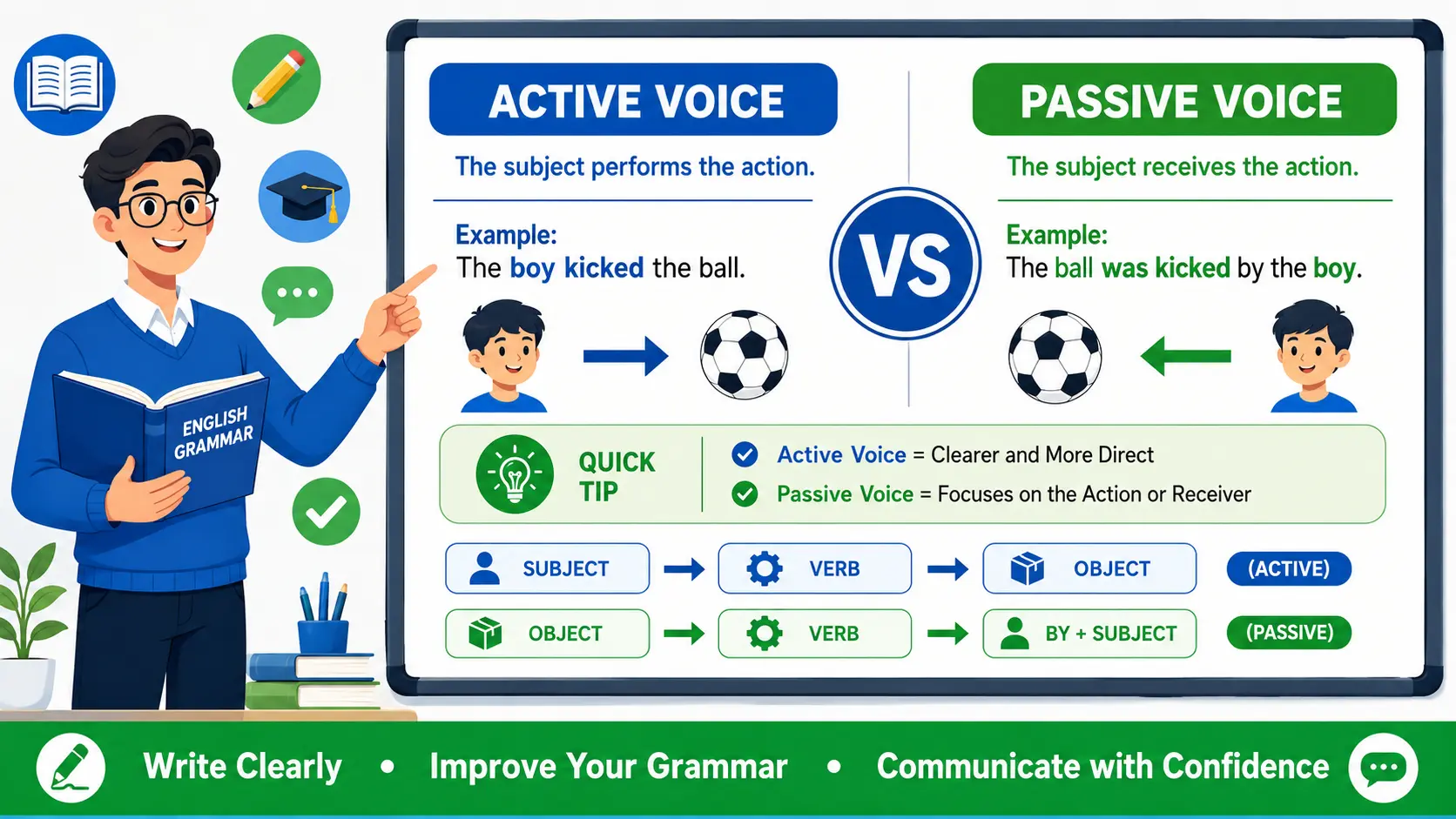
Active Voice vs. Passive Voice: The Secret to Stronger Sentences
Active voice vs. passive voice is one of those grammar topics that sounds incredibly intimidating—like something straight out of a dusty textbook. But in reality, it’s just about energy and focus. Understanding the difference isn’t just about passing a grammar test; it is the ultimate secret weapon for making your writing clearer, more punchy, and…
-
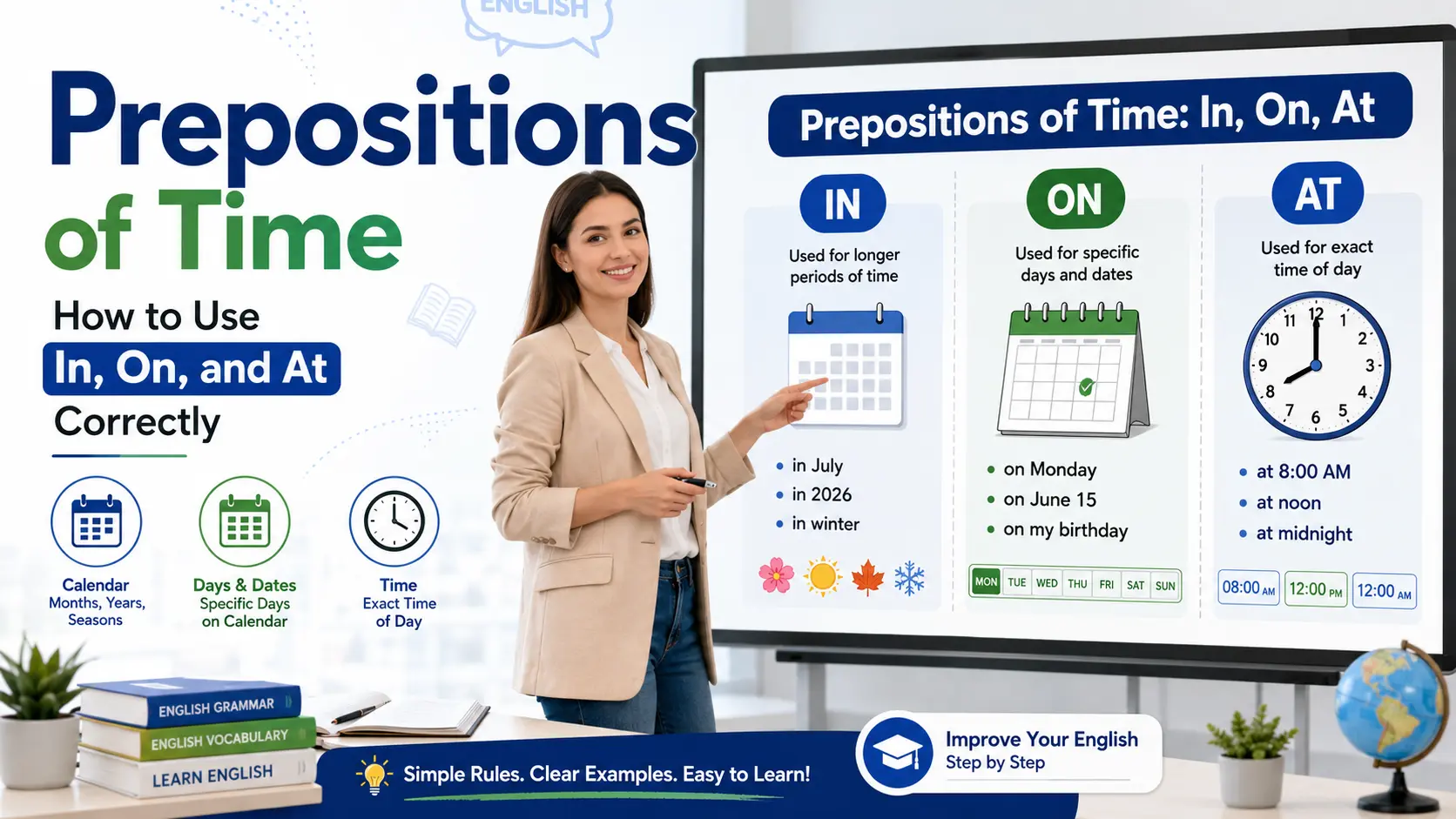
Prepositions of Time: In, On, At
Prepositions of time serve as time markers in English grammar. They establish temporal relationships between the action (verb) and a specific point in time, allowing your reader or listener to anchor events accurately on a timeline. Without prepositions of time, telling stories, setting appointments, or detailing historical sequences would become disjointed and confusing. Understanding these…