-

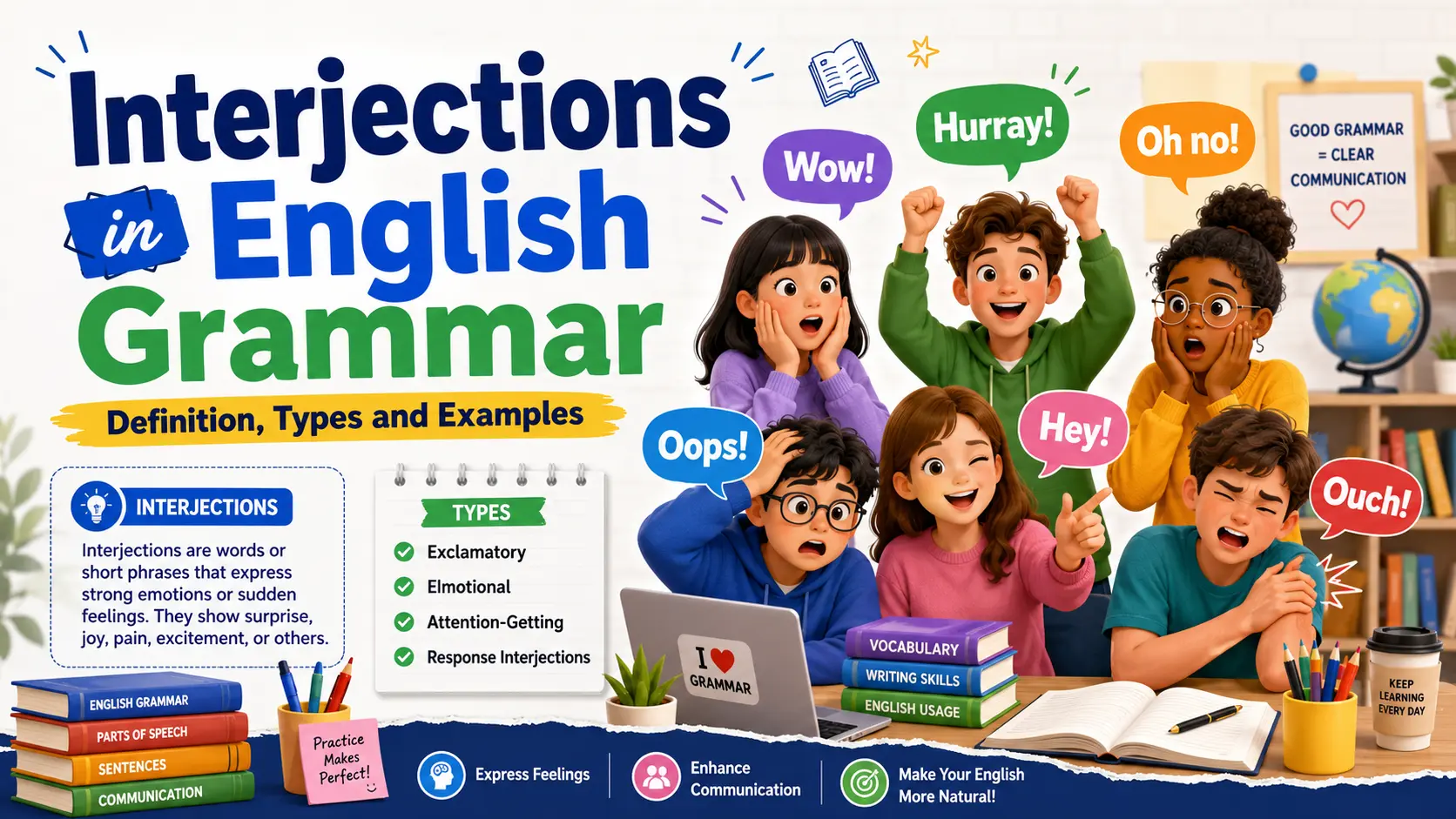
Interjections in English Grammar: Definition, Types and Examples
Interjections in English grammar are short, powerful words or phrases used to express sudden feelings, spontaneous emotions, reactions, or immediate physical responses. Whether you are exclaiming “Wow!” at a stunning sunset, crying “Ouch!” after bumping your toe, or calling out “Hey!” to catch a friend’s attention, interjections serve as the primary emotional drivers of daily…
-
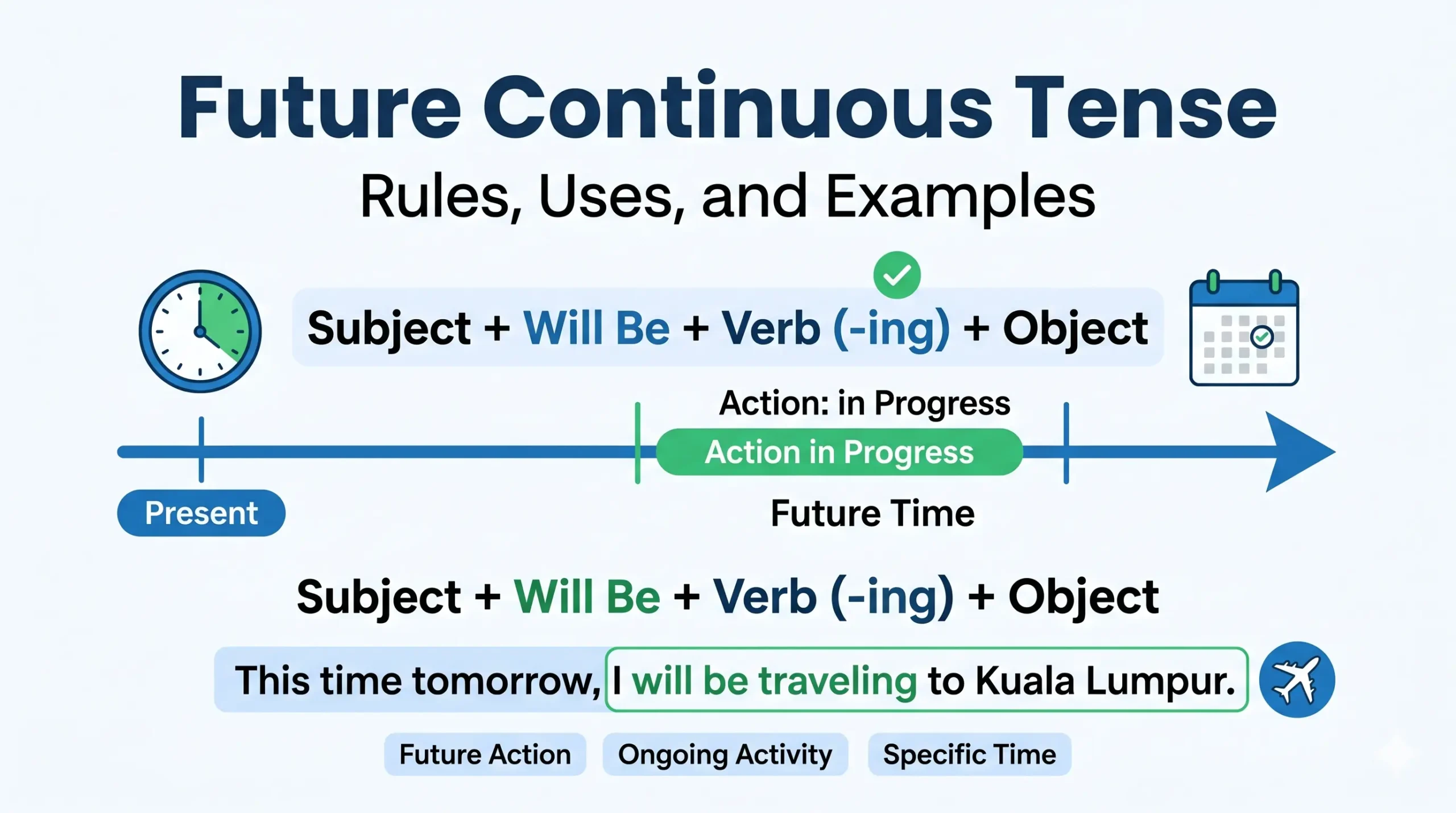
Future Continuous Tense: Rules, Uses, and Examples
Introduction The Future Continuous Tense is used to describe an action that will be happening at a specific time in the future. It is one of the most useful English grammar tenses because it helps speakers talk about future plans, ongoing activities, and predictions naturally. In everyday conversations, native English speakers often use the future…
-
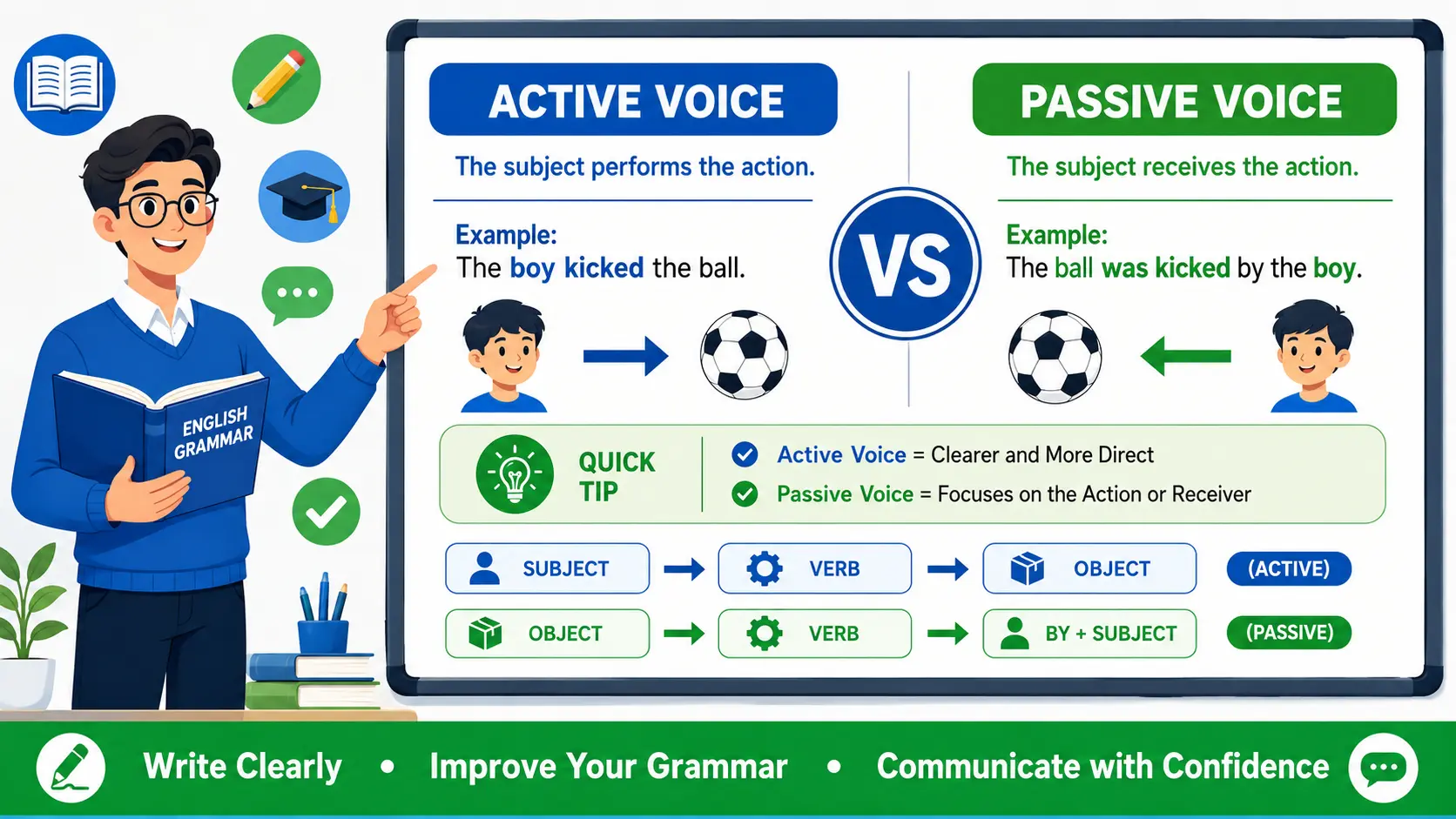
Active Voice vs. Passive Voice: The Secret to Stronger Sentences
Active voice vs. passive voice is one of those grammar topics that sounds incredibly intimidating—like something straight out of a dusty textbook. But in reality, it’s just about energy and focus. Understanding the difference isn’t just about passing a grammar test; it is the ultimate secret weapon for making your writing clearer, more punchy, and…