-

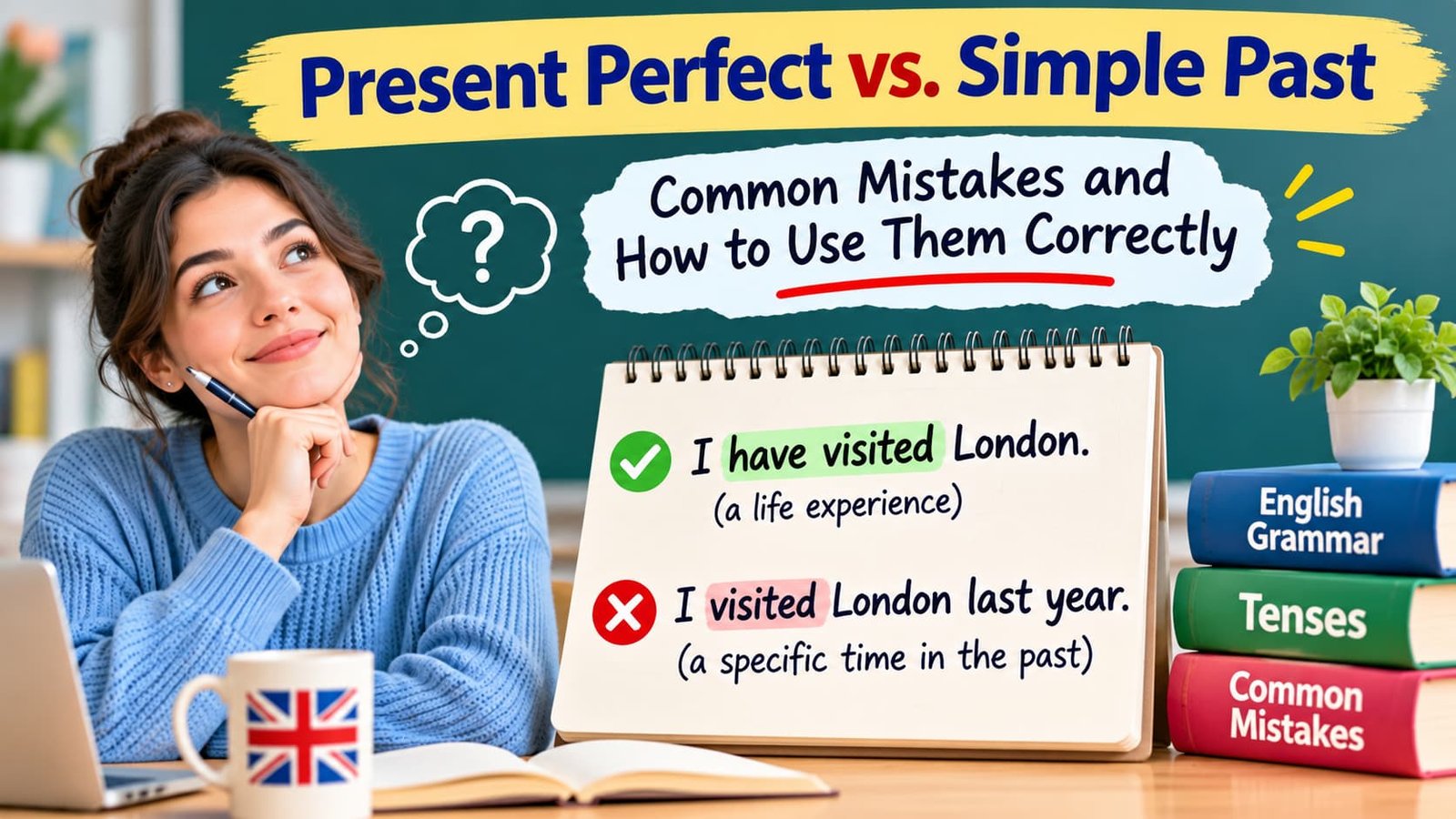
Present Perfect vs. Simple Past: Common Mistakes and How to Use Them Correctly
Present Perfect vs Simple Past is a common grammar challenge for English learners. Both tenses describe actions that happened in the past, but they are used in different situations. Look at these two sentences: Both sentences tell us that someone went to London. The difference is that the first describes a life experience without saying…
-
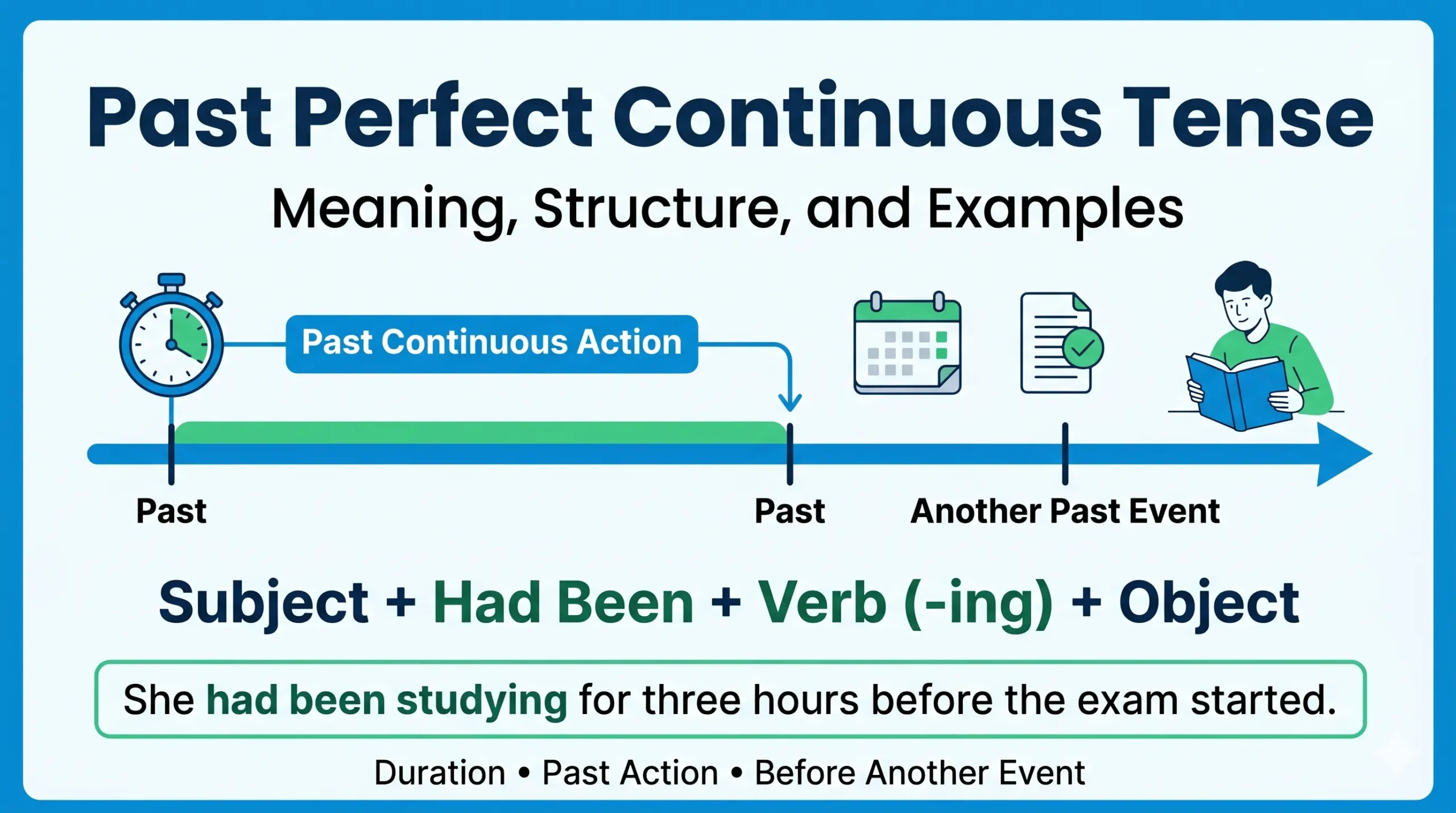
Past Perfect Continuous Tense: Meaning, Structure, and Examples
The Past Perfect Continuous Tense may seem a little difficult at first, but it becomes much easier once you understand when and how to use it. We use this tense to talk about an action that started in the past and continued for some time before another event or a particular moment in the past.…
-
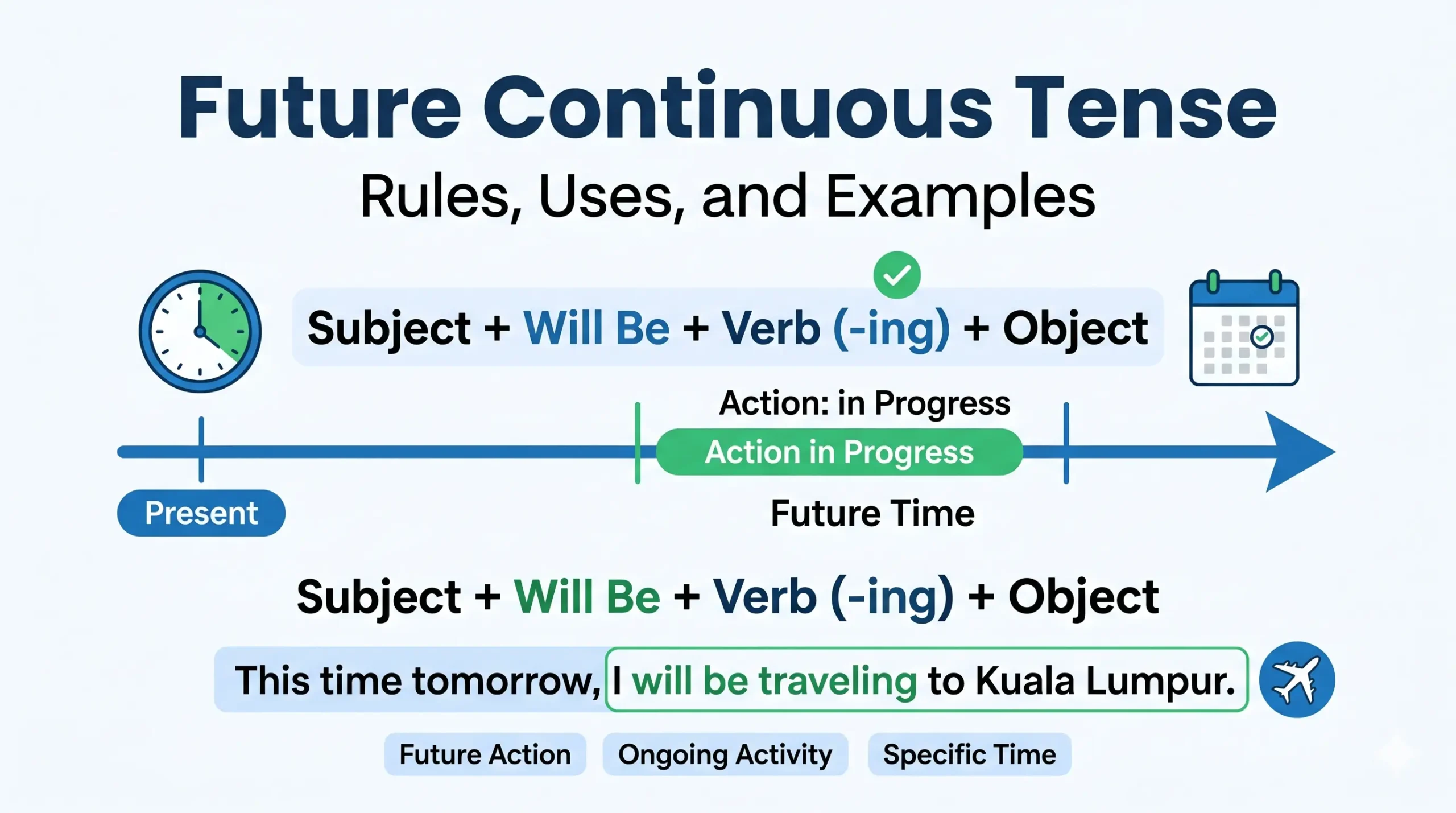
Future Continuous Tense: Rules, Uses, and Examples
Have you ever talked about what you will be doing at a particular time tomorrow or next week? Perhaps you’ll be travelling, attending a meeting, or watching your favourite television programme. When you want to describe an activity that will be in progress at a specific time in the future, you use the Future Continuous…
-
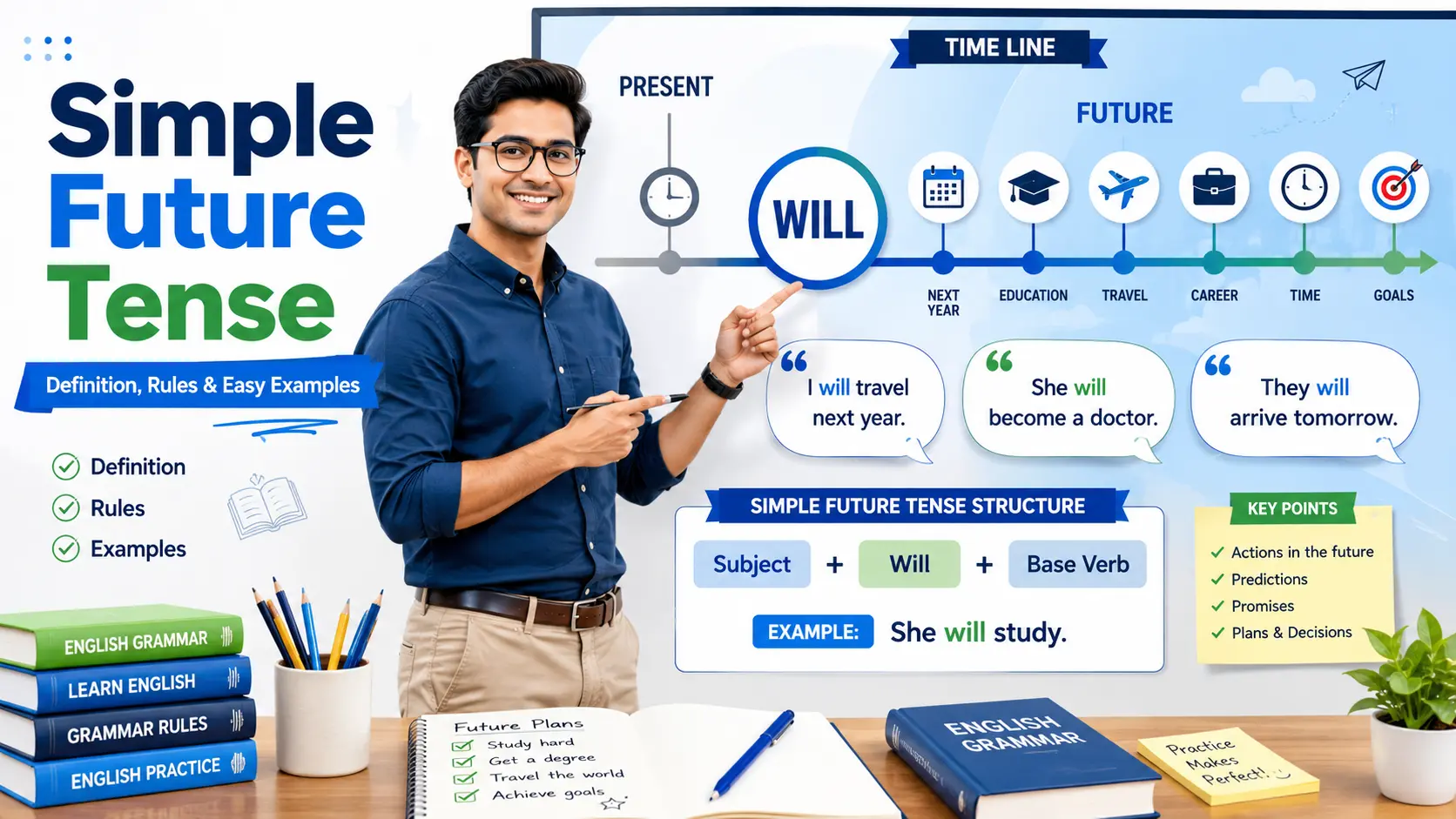
Simple Future Tense: Definition, Rules, and Easy Examples
We often talk about things that have not happened yet. We make plans for tomorrow, think about what might happen next week, and sometimes promise to do something for someone. In English, we use the Simple Future Tense to express these ideas. The Simple Future Tense describes actions or events that will happen in the…
-
Past Perfect Tense (Definition, Formula, Examples & Exercises)
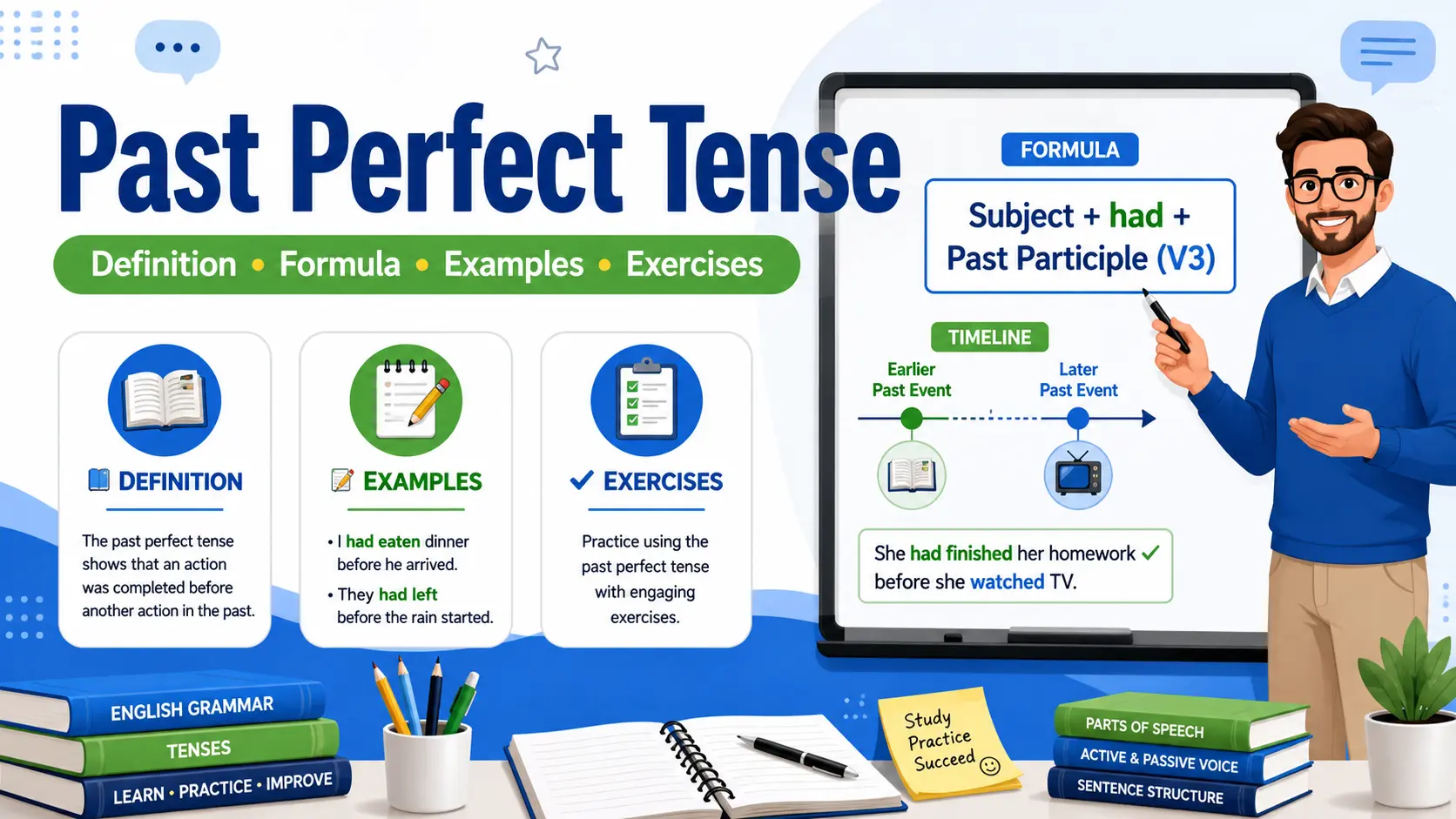
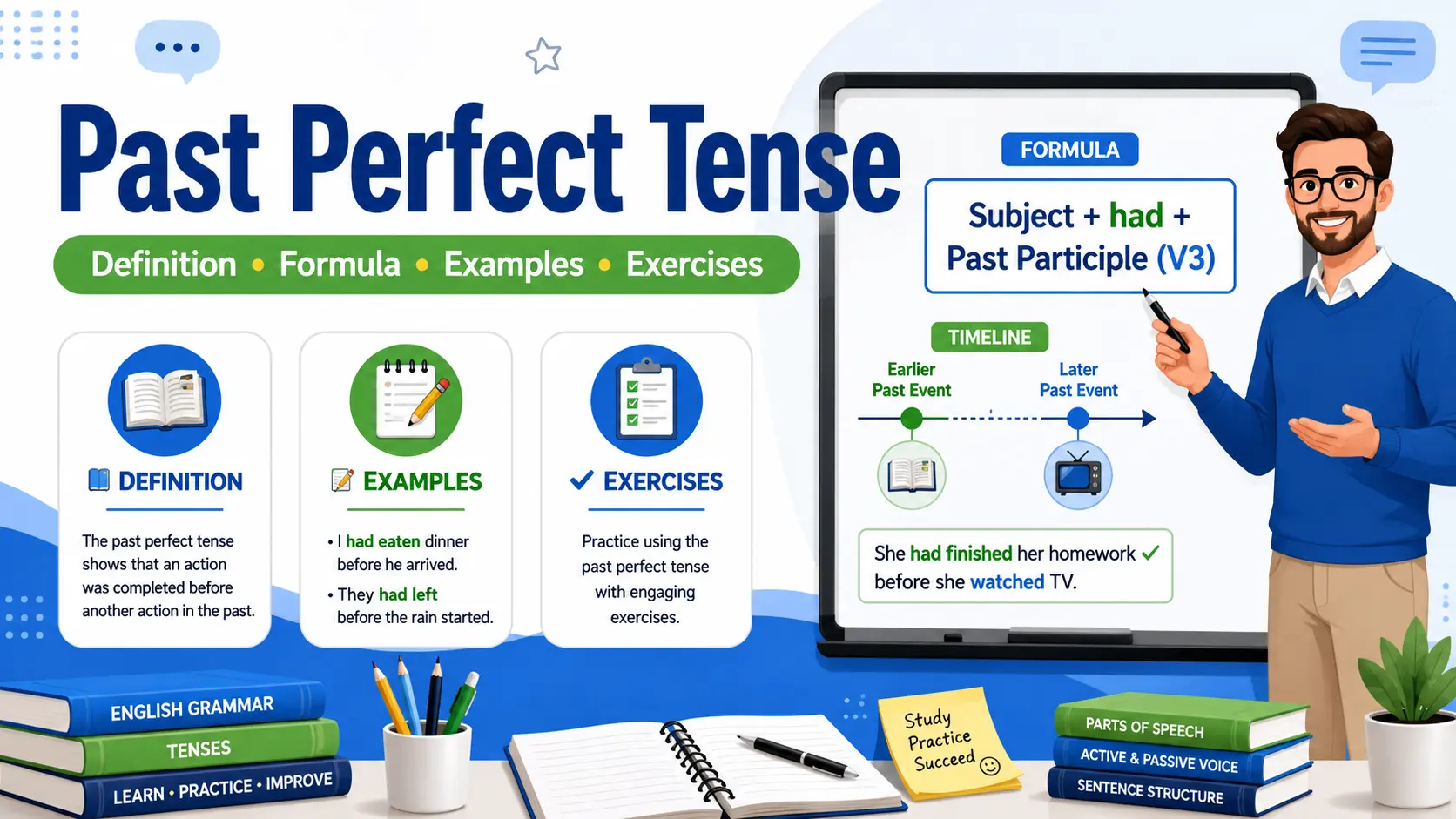
Have you ever told a story about something that happened in the past, then realised you needed to explain what had happened even earlier? This is when the Past Perfect Tense becomes useful. For example: “By the time I finally sat down to watch the match, my friend had already spoiled the score.” In this…
-
Present Perfect Continuous Tense: Structure, Examples, and Usage
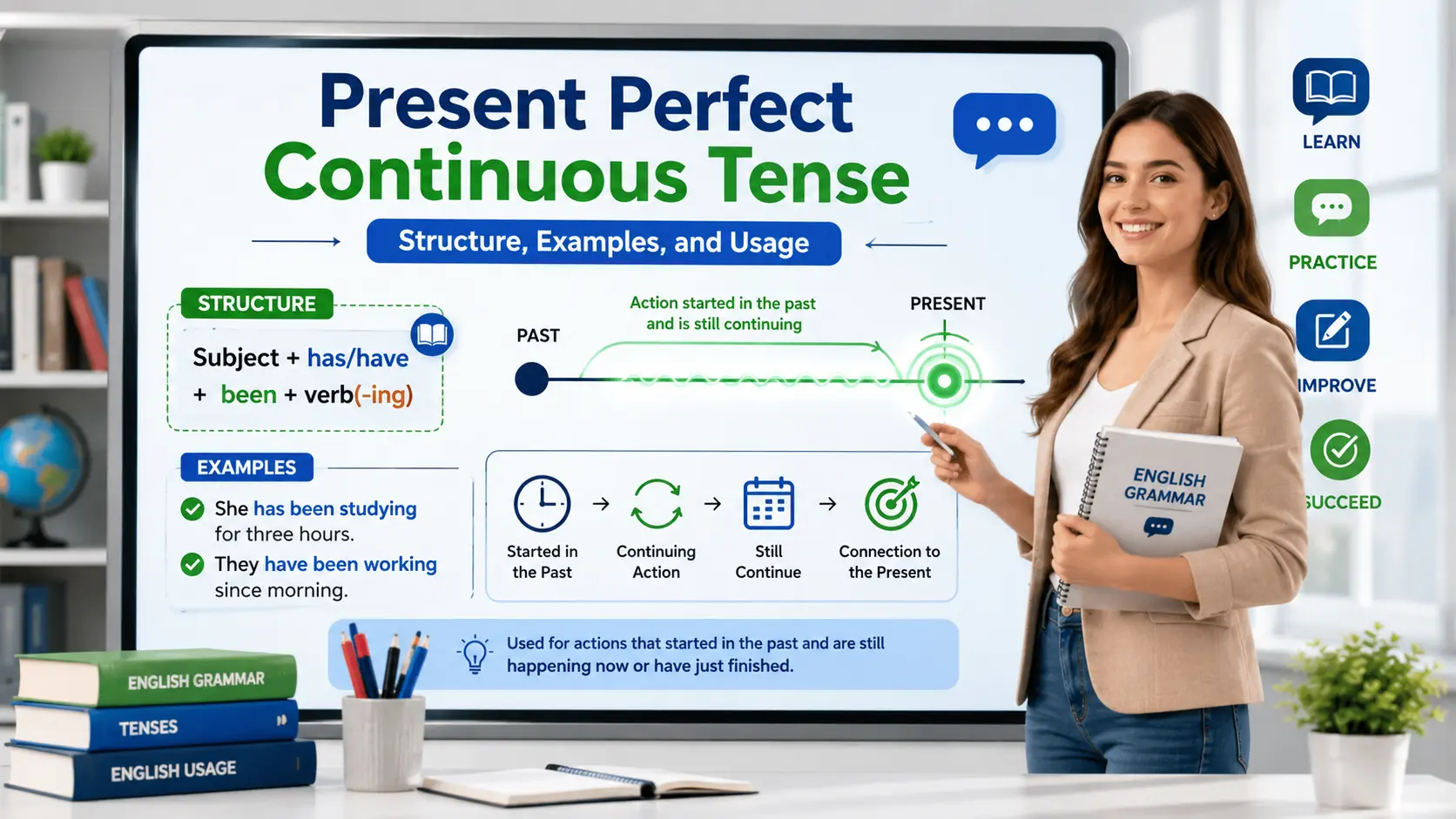
Have you ever wanted to explain how long you’ve been doing something, or why someone looks tired after working for hours? The Present Perfect Continuous Tense is useful in situations like these. We use this tense to describe an action that started in the past and is still continuing, or an activity that has recently…
-
Past Continuous Tense: Easy Explanation, Examples
Have you ever been doing something when another event suddenly happened? For example, you were watching television when the phone rang, or you were cooking dinner when someone knocked on the door. These are everyday situations where we use the Past Continuous Tense. The Past Continuous Tense describes an action that was already happening at…
-
Present Perfect Tense: Rules, Examples, and Easy Guide
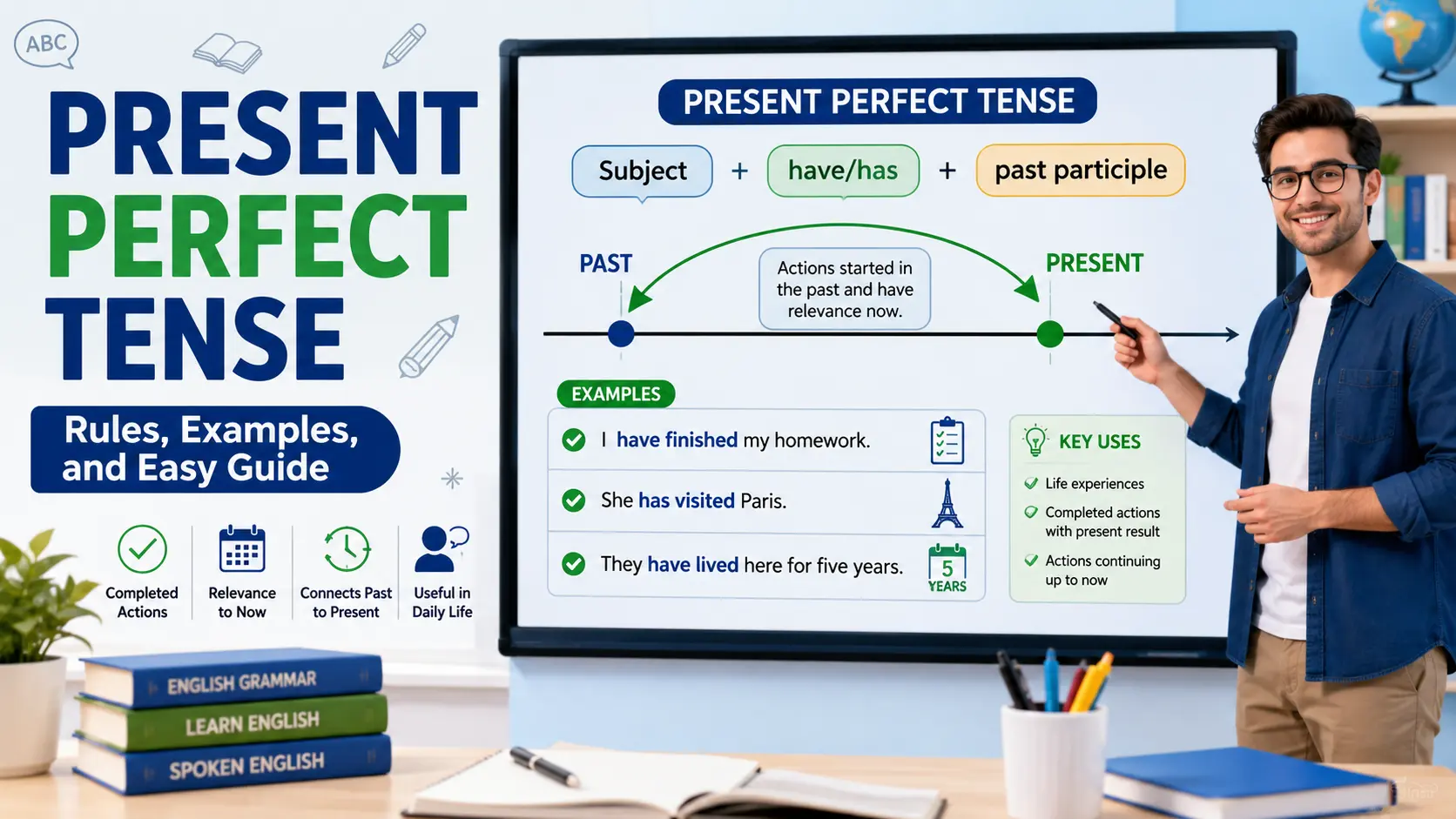
The Present Perfect Tense is an important part of English grammar, but many learners find it a little confusing at first. This is because it connects the past with the present. We use it to talk about past experiences, actions that happened at an unspecified time, and situations that started in the past and continue…
-
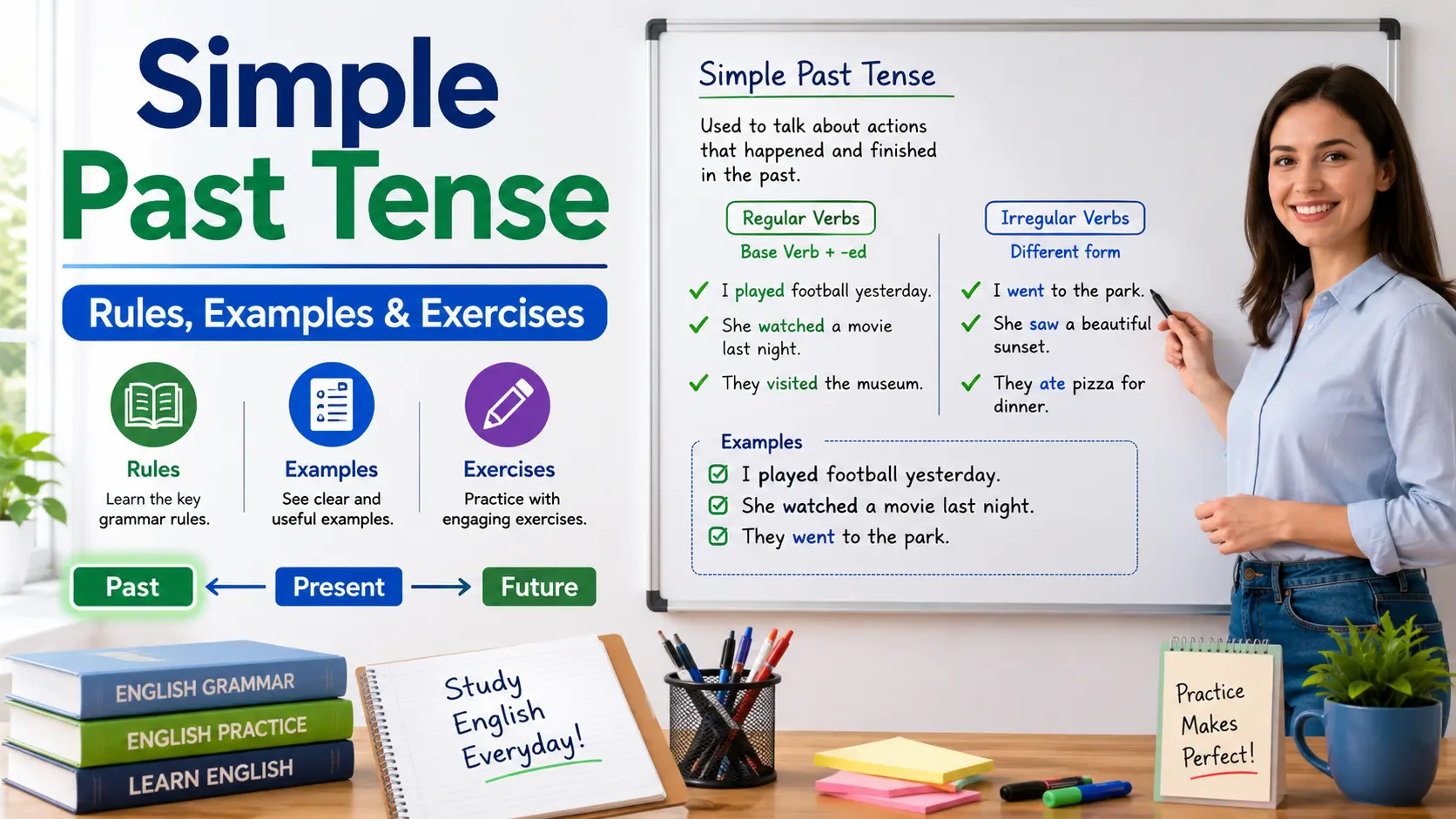
Simple Past Tense (Rules, Examples & Exercises)
The Simple Past Tense is used to describe actions or events that happened and were completed in the past. It is one of the most commonly used tenses in English, especially when talking about past experiences, daily activities, and things that happened before now. The good thing about this tense is that you don’t need…
-
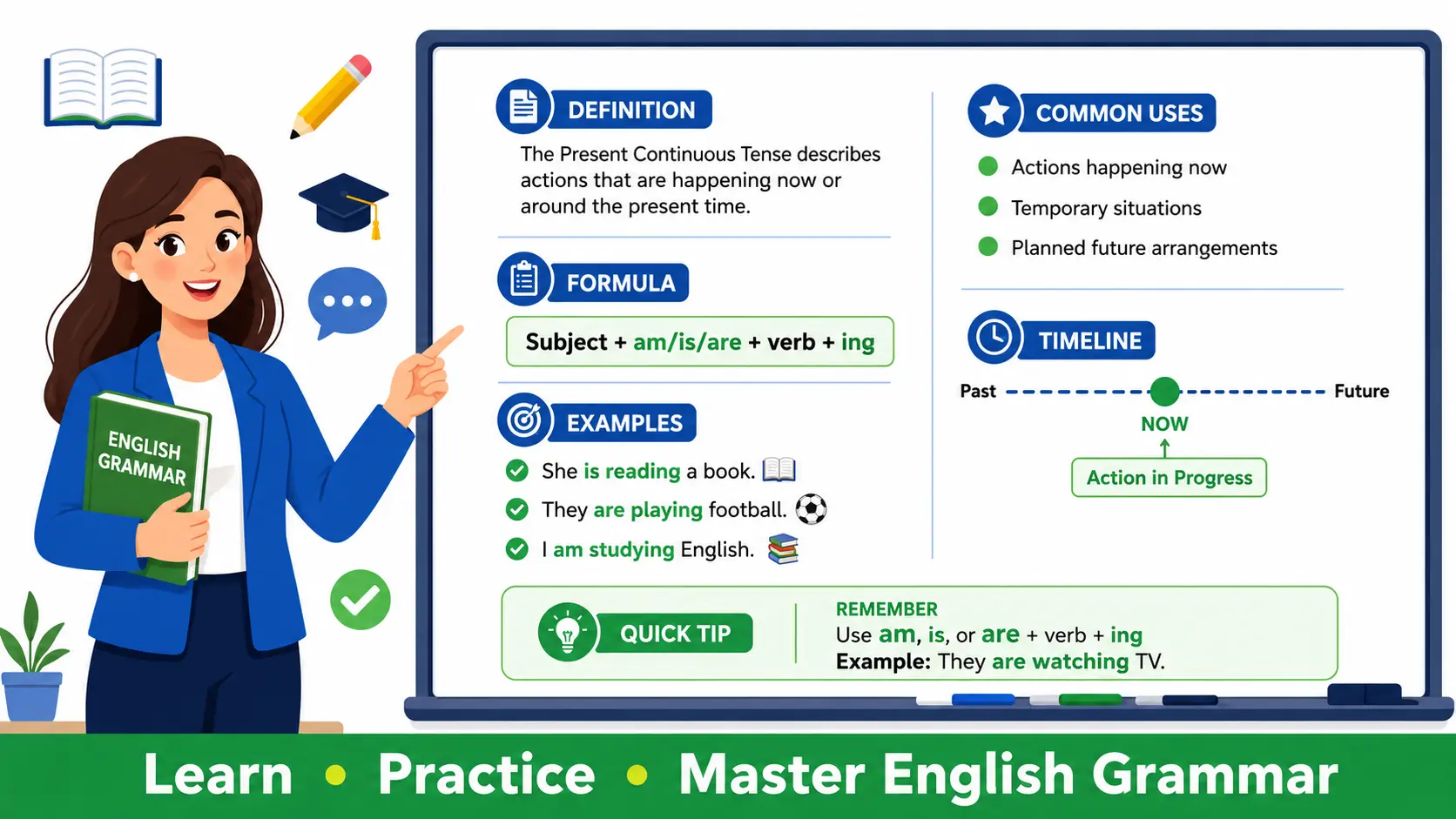
Present Continuous Tense Rules (With Examples & Easy Guide)
The present continuous tense is used to describe actions that are happening now or activities that are taking place around the present time. Also known as the present progressive tense, it helps us talk about ongoing actions, temporary situations, and changes that are happening at the moment or during the current period. The structure is…
-
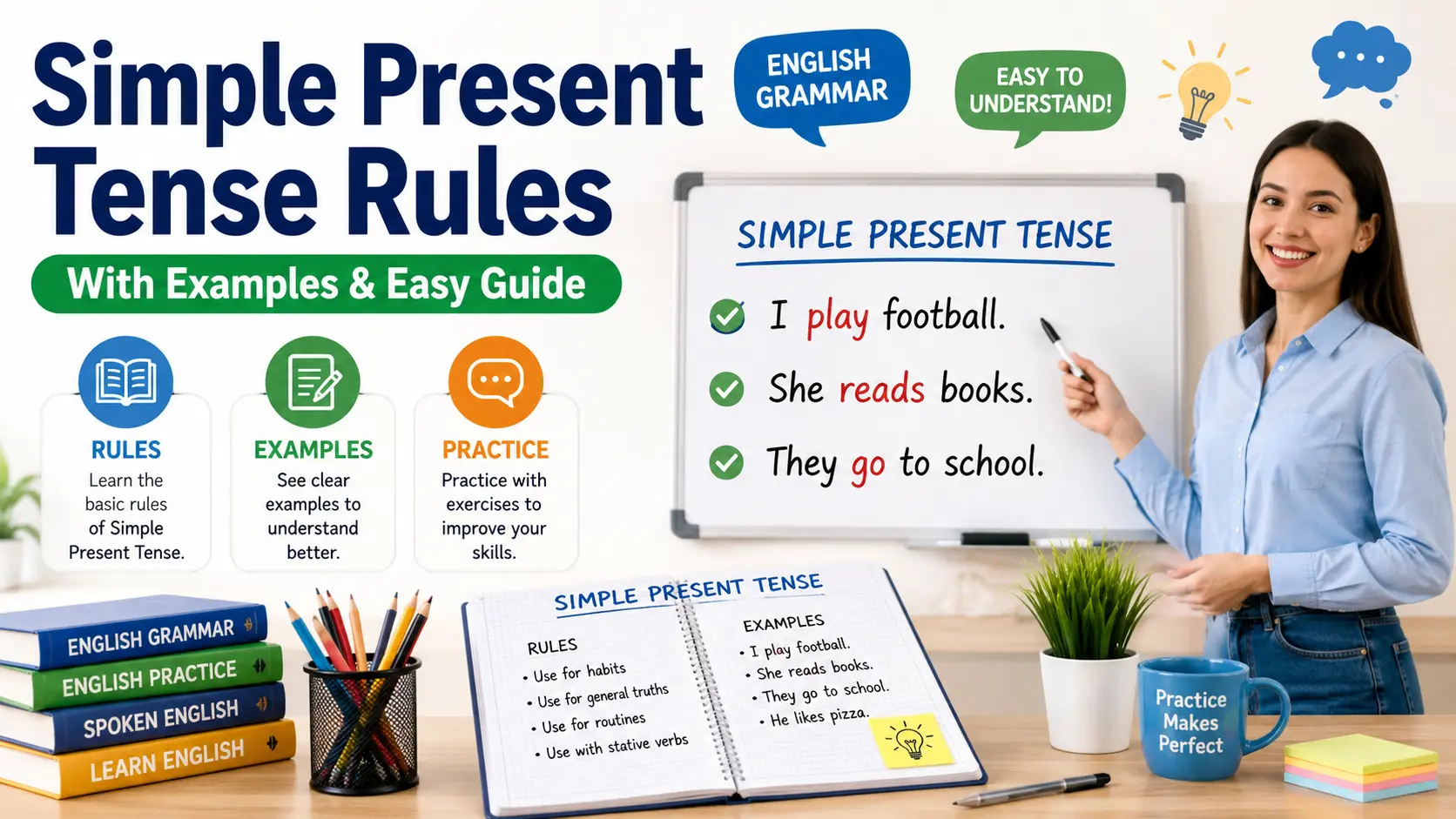
Simple Present Tense Rules (With Examples & Easy Guide)
The Simple Present Tense is one of the basic and most commonly used tenses in English grammar. We use it to talk about daily routines, habits, general truths, and things that happen regularly. Learning its rules will help you form sentences correctly and communicate more clearly in everyday English. We use the Simple Present Tense…