-

Borrow vs. Lend: Rules, Examples, and Common Mistakes
When learning English grammar, understanding Borrow vs. Lend can often be confusing because both verbs describe the temporary transfer of an item from one person to another. However, using the wrong word completely flips the direction of the action and alters the meaning of your sentence. In this guide, you will learn the exact grammatical…
-
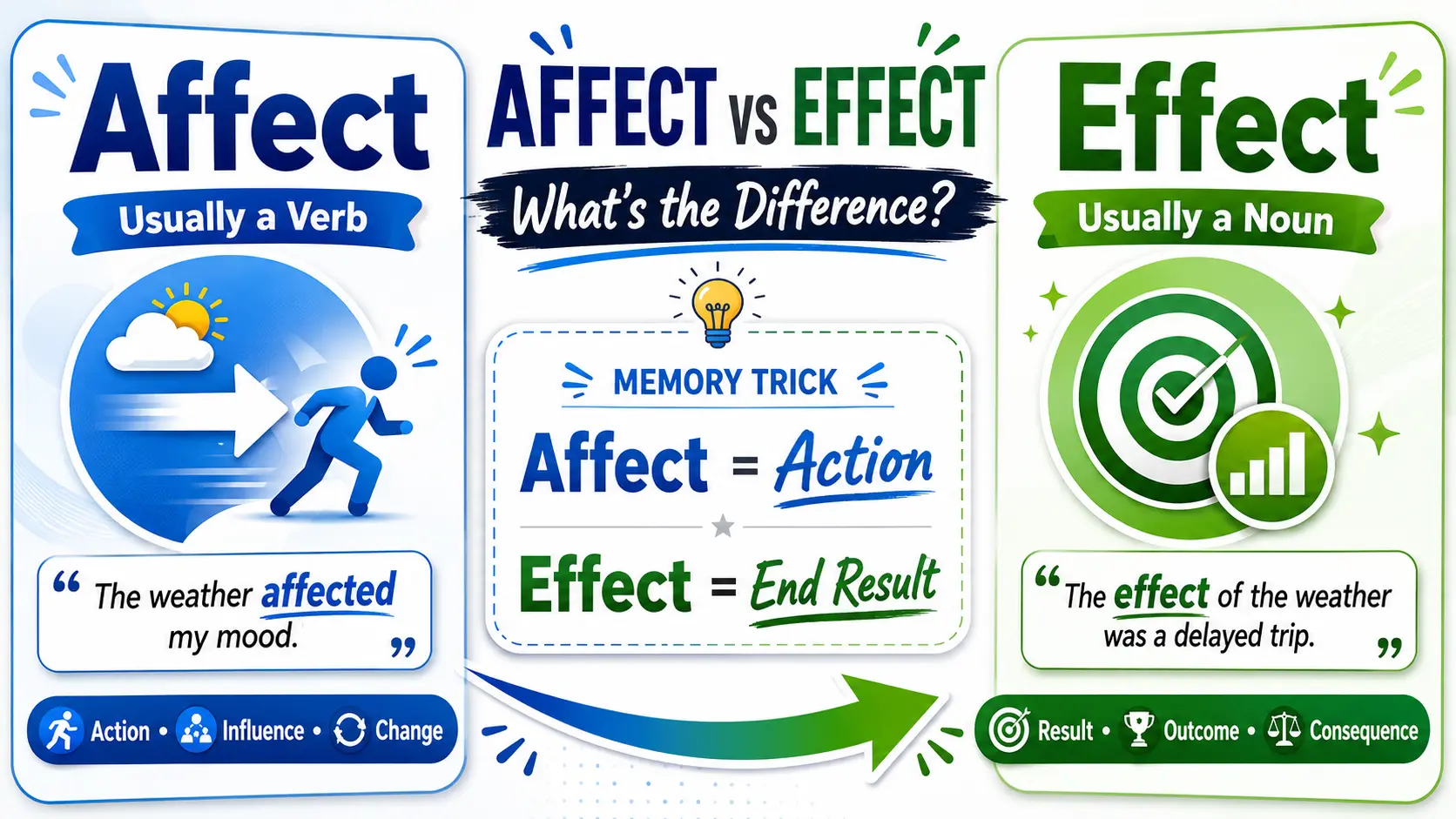
Affect vs Effect: What’s the Difference? (Easy Guide with Examples)
Many English learners struggle with affect vs effect because these words sound similar and are often used in related situations. Let’s be honest: even native English speakers look at a blank screen sometimes, cursor blinking, wondering whether to type affect or effect. It’s one of those grammar hurdles that feels designed to trip us up.…
-
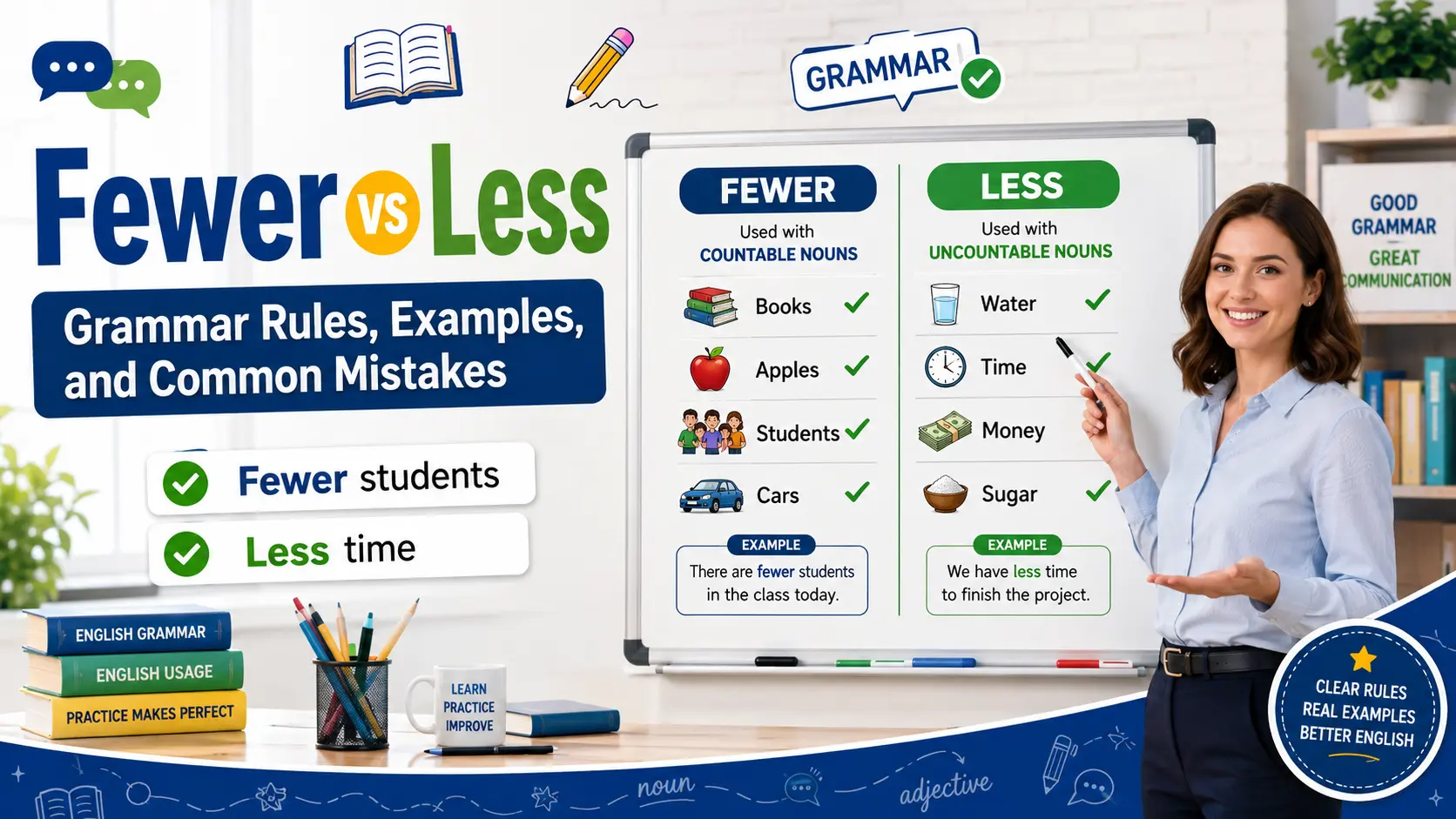
Fewer vs Less: Grammar Rules, Examples, and Common Mistakes
Fewer vs less is one of the most common grammar mistakes in English. Have you ever wondered whether you should say “fewer people” or “less people”? Many English learners—and even native speakers—confuse these two words. If you’ve ever stood in a grocery store checkout line, stared at the “10 items or less” sign, and felt…
-
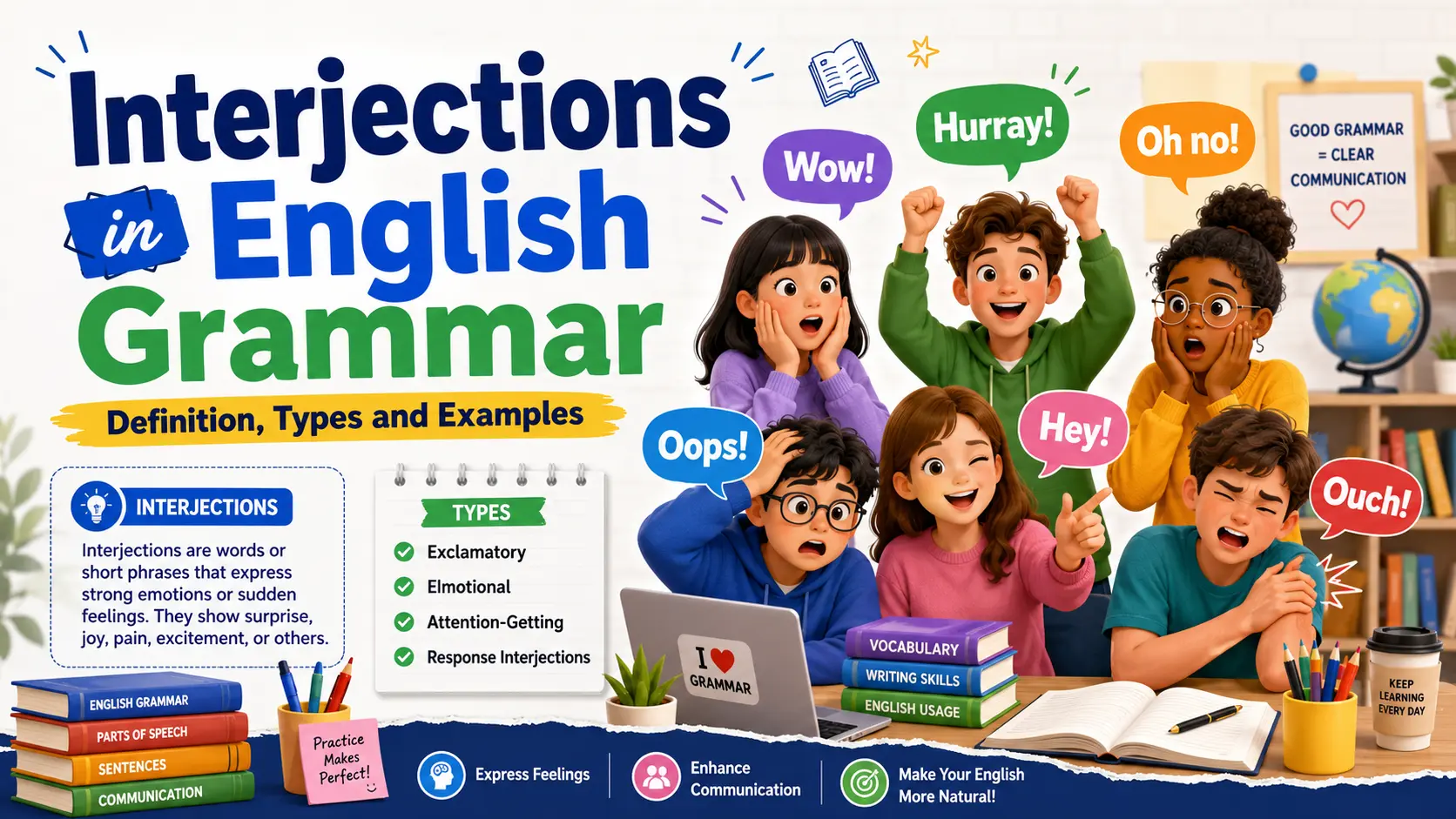
Interjections in English Grammar: Definition, Types and Examples
Interjections in English grammar are short, powerful words or phrases used to express sudden feelings, spontaneous emotions, reactions, or immediate physical responses. Whether you are exclaiming “Wow!” at a stunning sunset, crying “Ouch!” after bumping your toe, or calling out “Hey!” to catch a friend’s attention, interjections serve as the primary emotional drivers of daily…
-
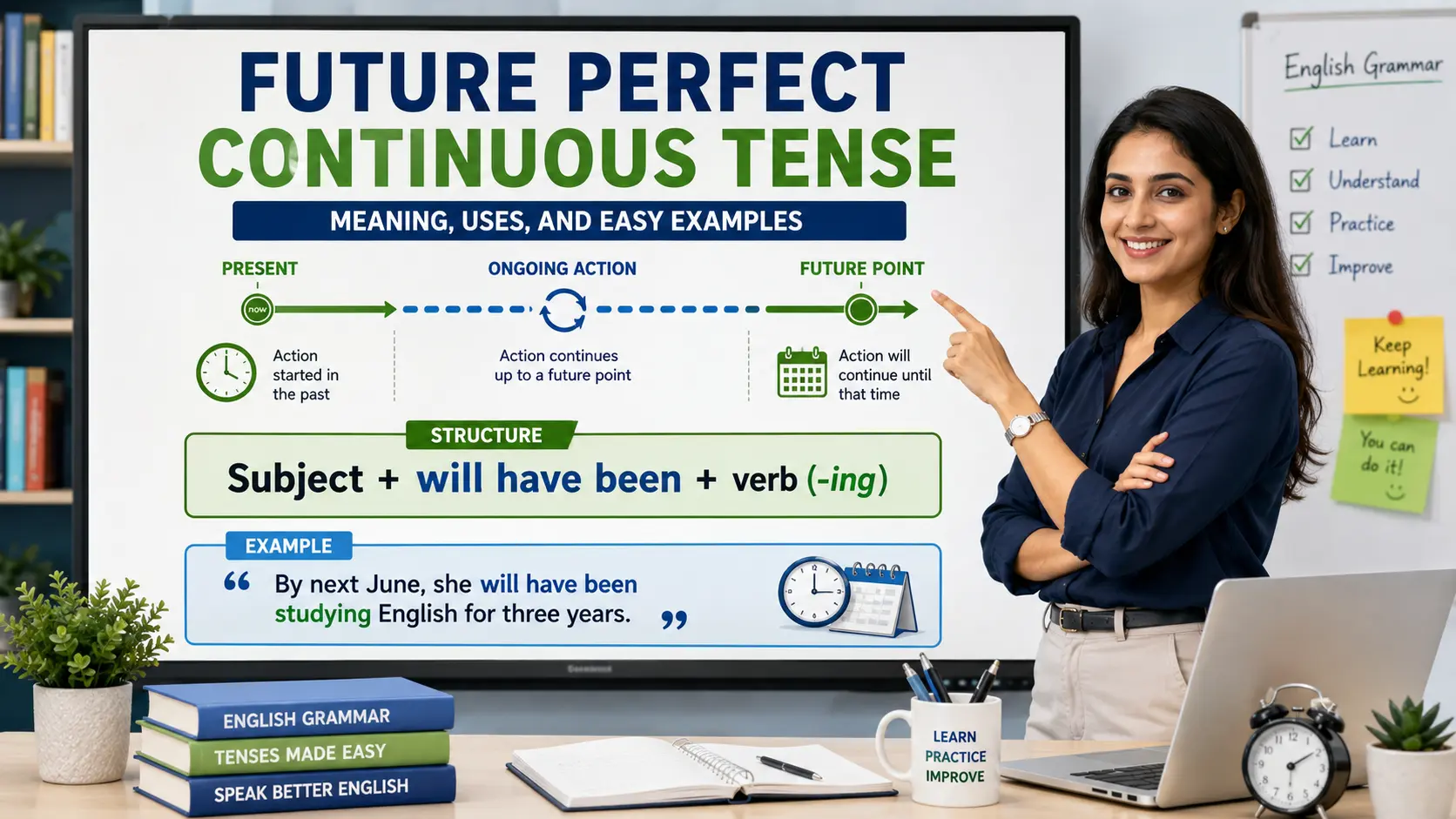
Future Perfect Continuous Tense: Meaning, Uses, and Easy Examples
Learning English grammar can sometimes feel confusing, especially when you come across long tense names like the Future Perfect Continuous Tense. At first glance, the name may sound difficult, but once you understand its structure and purpose, it becomes much easier to use in everyday communication. I remember the first time I saw this tense…
-
Future Perfect Tense: Rules, Uses, and Examples
Introduction The Future Perfect Tense is used to describe an action that will be completed before a certain time or event in the future. It helps show that something will already be finished at a specific point in time. This tense is very useful in both writing and speaking because it allows you to talk…
-
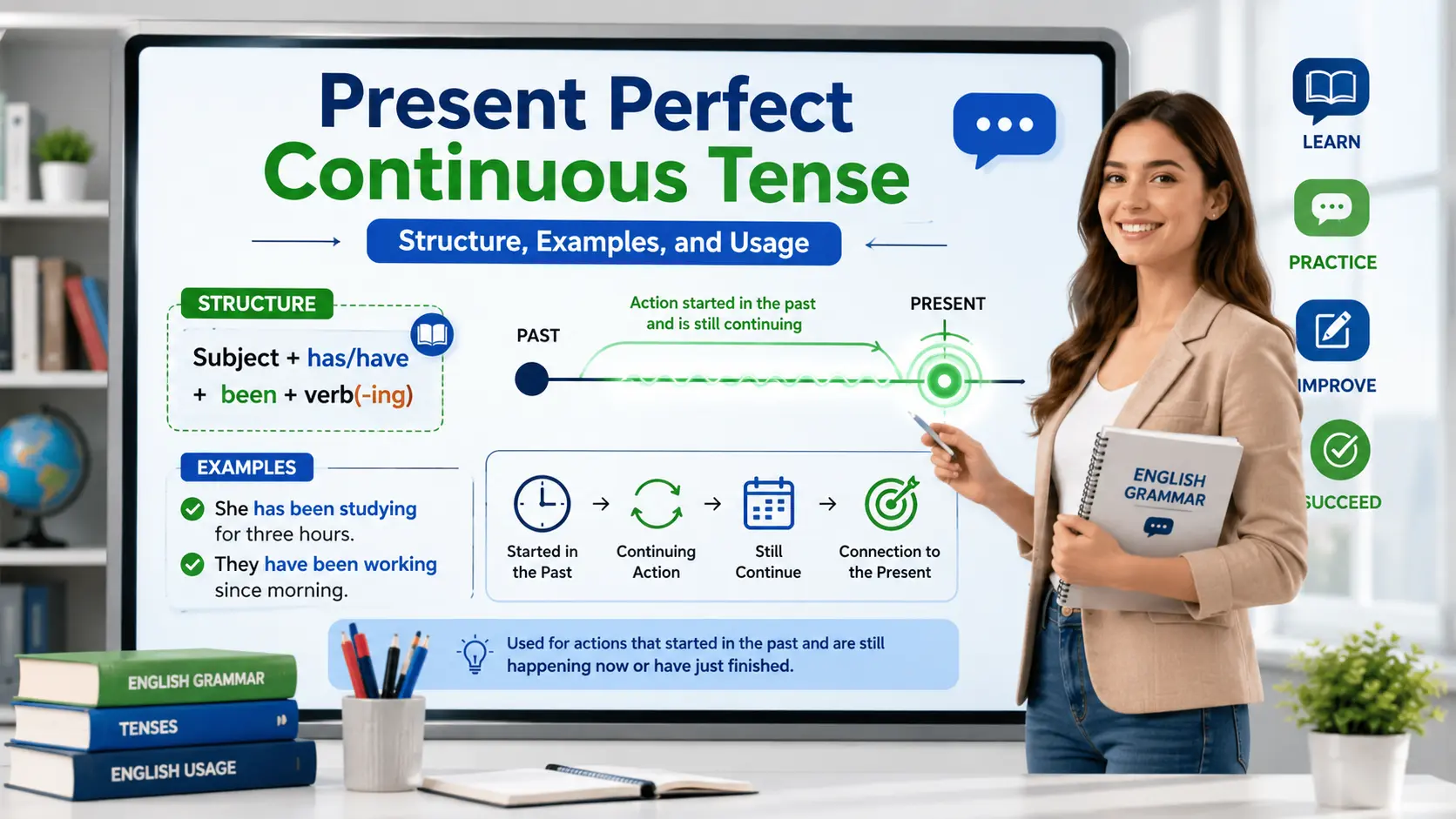
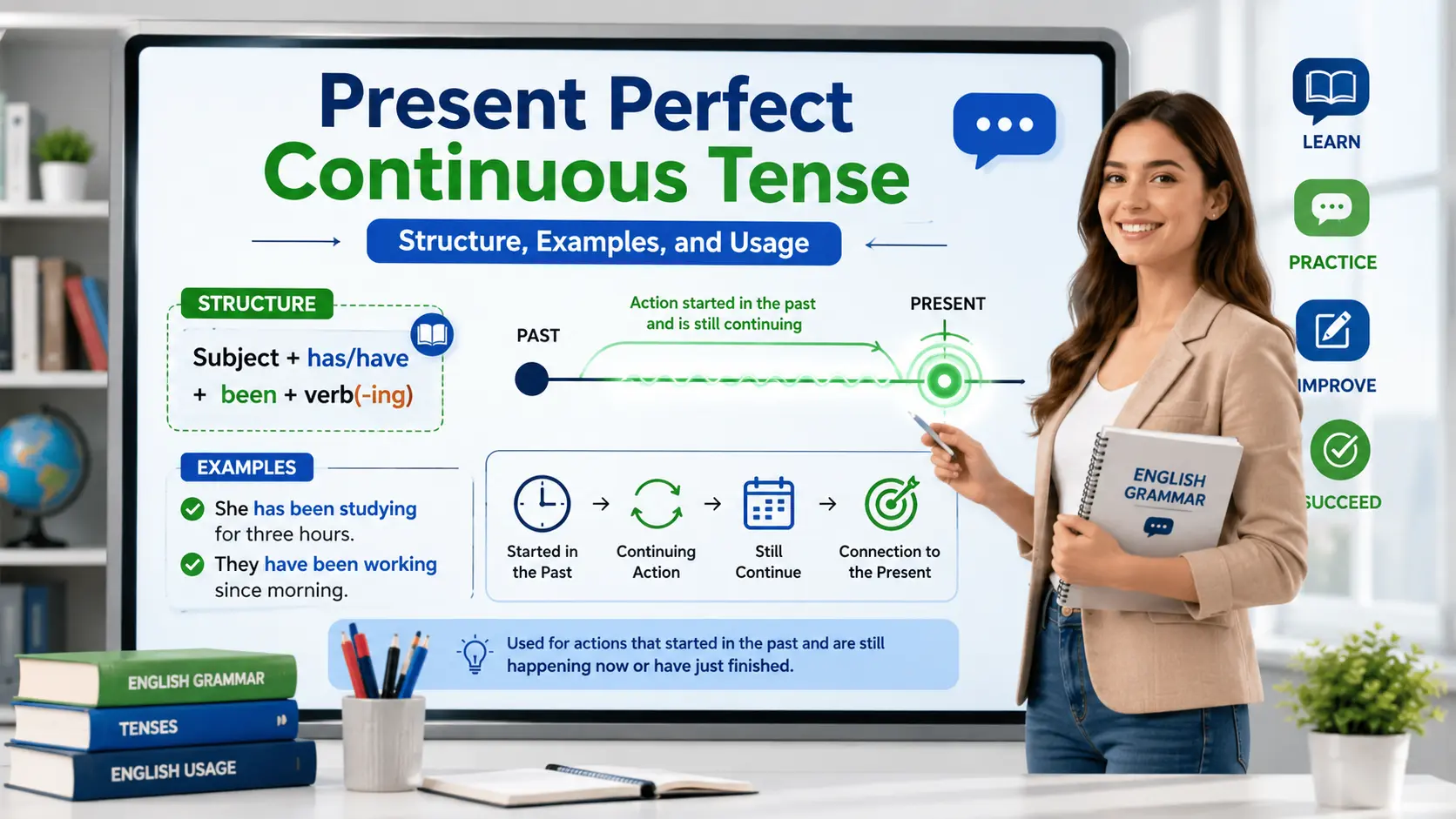
Present Perfect Continuous Tense: Structure, Examples, and Usage
The Present Perfect Continuous Tense is used to describe actions that started in the past and are still continuing or have recently stopped but still have a visible result. This tense focuses on the duration of an action rather than just the result. Understanding this tense is important for improving fluency and expressing ongoing situations…
-
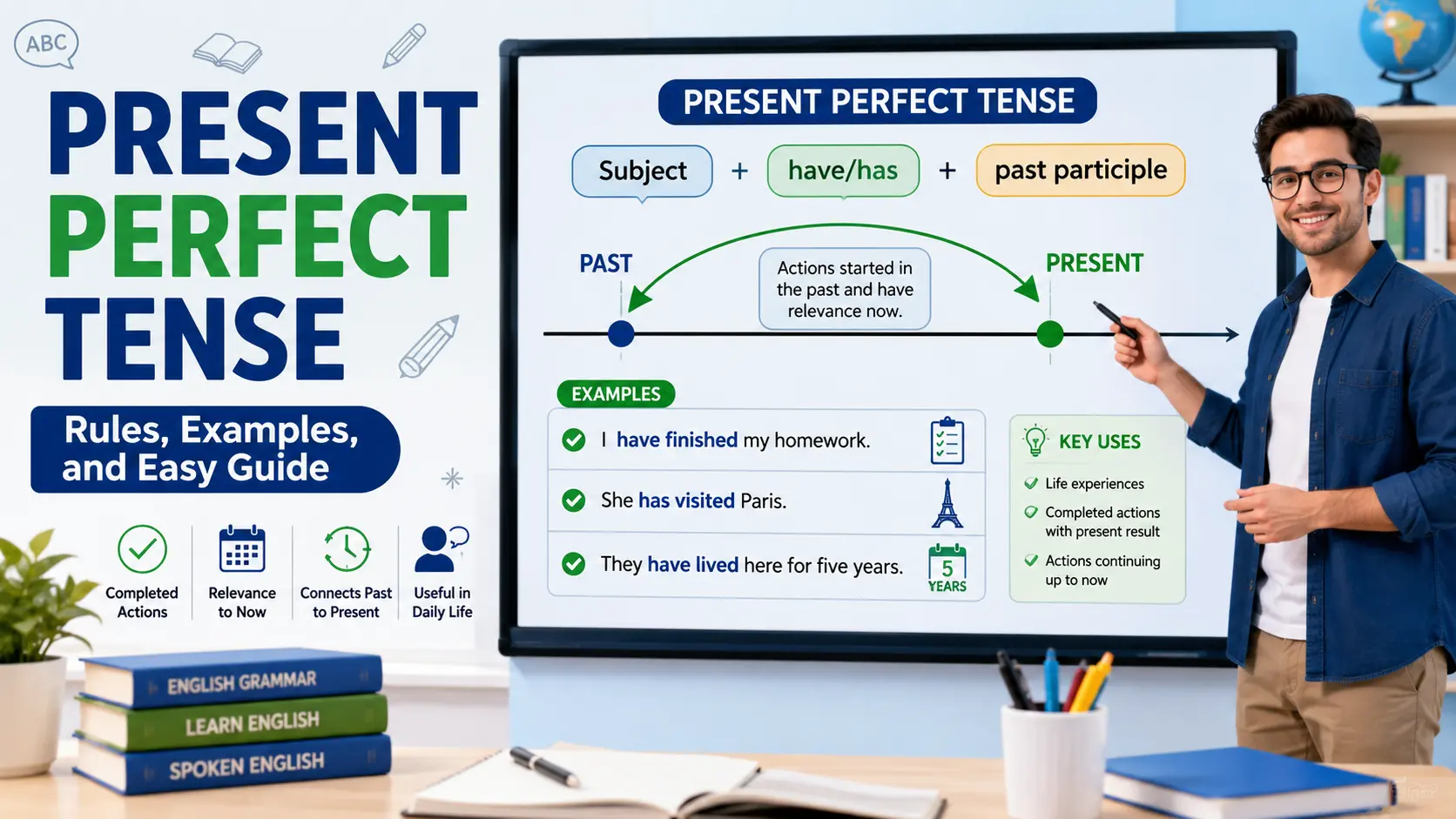
Present Perfect Tense: Rules, Examples, and Easy Guide
The present perfect tense is one of the most important topics in English grammar. It is used to describe actions that happened at an unspecified time before now or actions that started in the past and continue in the present. If you are learning English, understanding the present perfect tense will help you improve both…
-
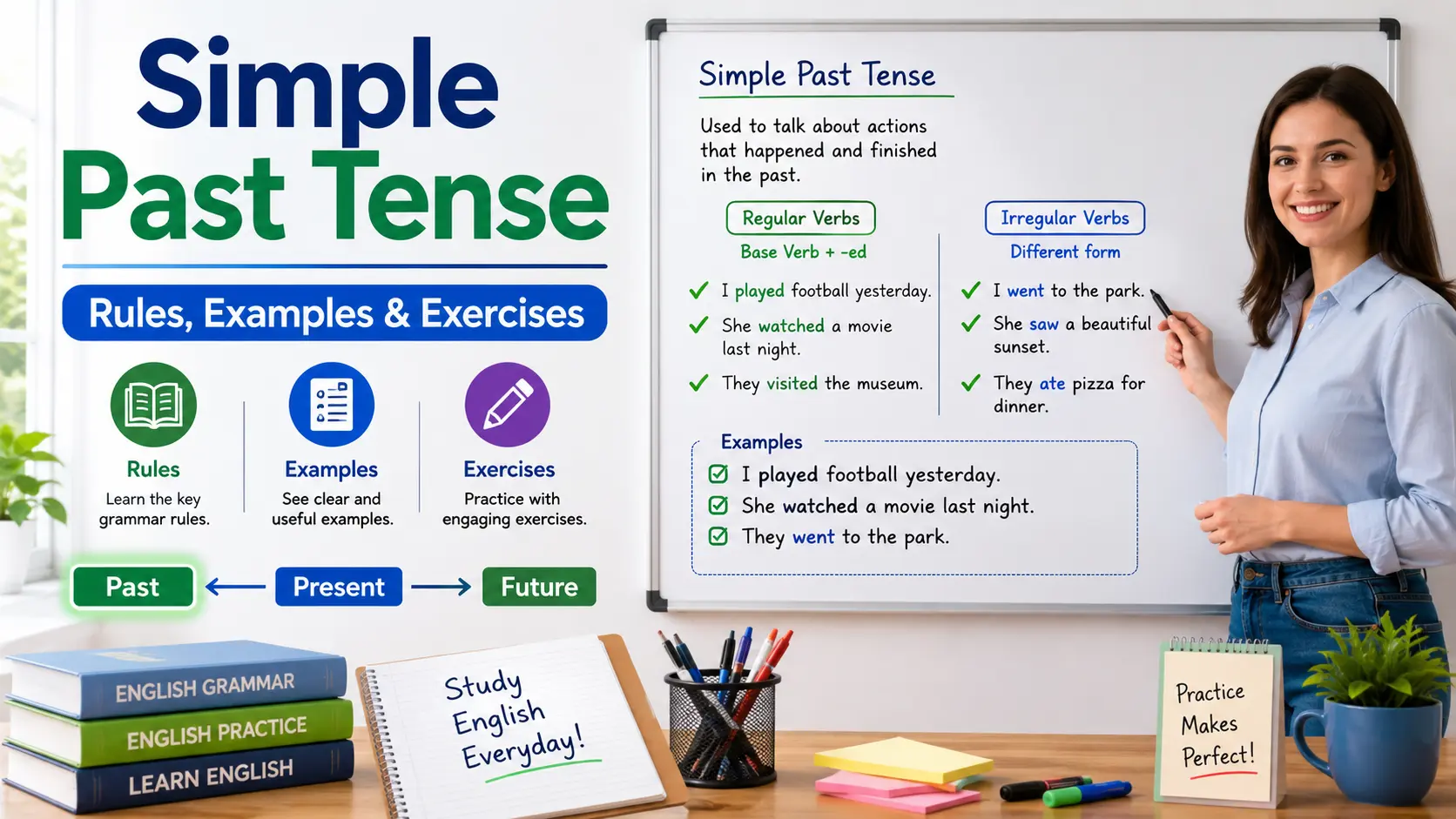
Simple Past Tense (Rules, Examples & Exercises)
The simple past tense is used to describe actions that happened and finished in the past. It is one of the main topics in English grammar, especially when learning different English tenses. 👉 These actions are already completed — they are not happening now. Examples: Think of the simple past tense as your personal storytelling…
-
Articles in English Grammar: A Complete Guide
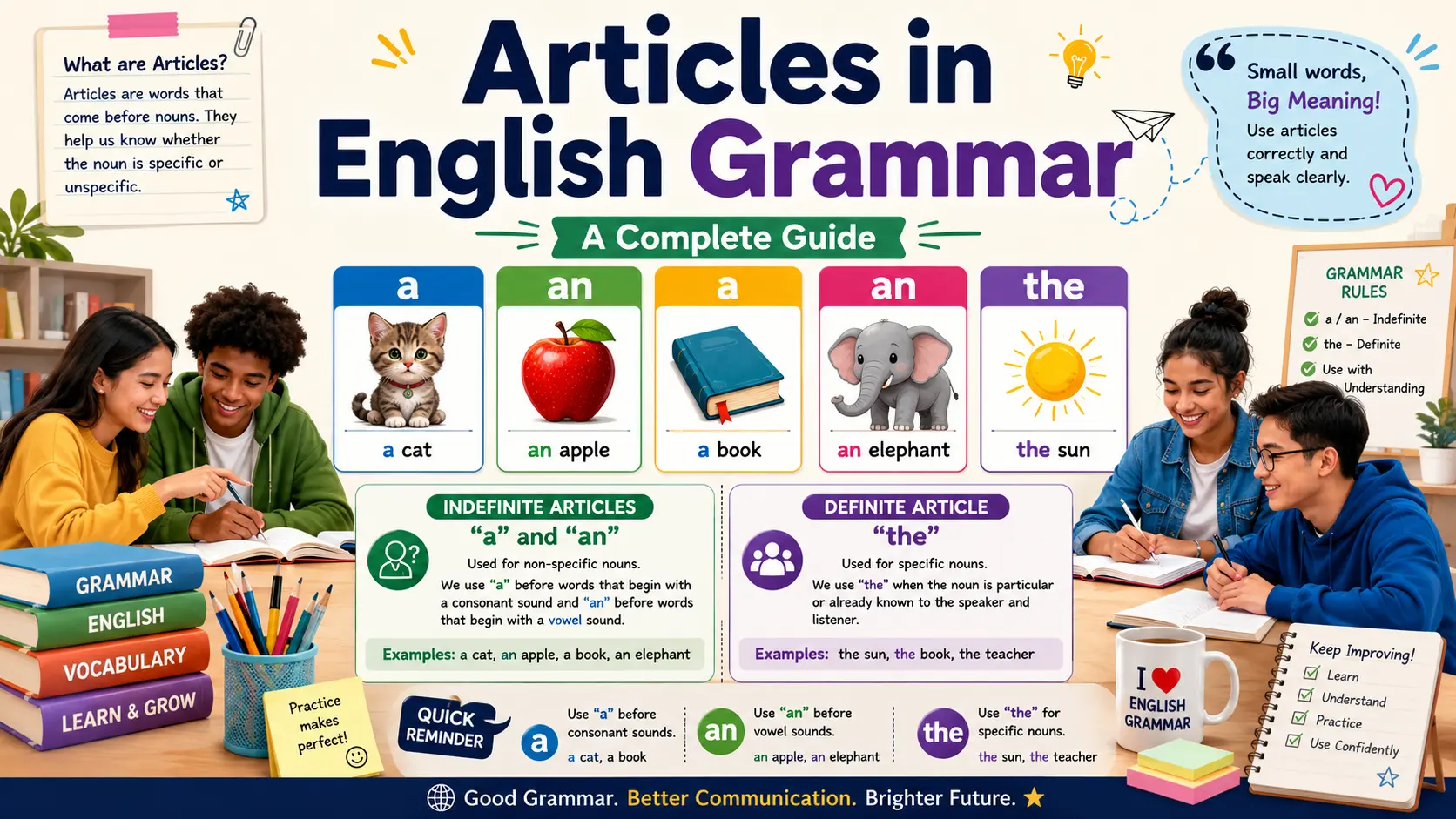
Many English learners overlook articles because they seem like tiny, insignificant filler words. However, think of articles as the directional signs of a sentence. They tell your listener exactly where to look: are we talking about any old “apple” in the bowl, or are we talking about “the apple” you’ve been saving for lunch? Getting…
-
Conjunctions in English Grammar (Complete Guide with Examples)
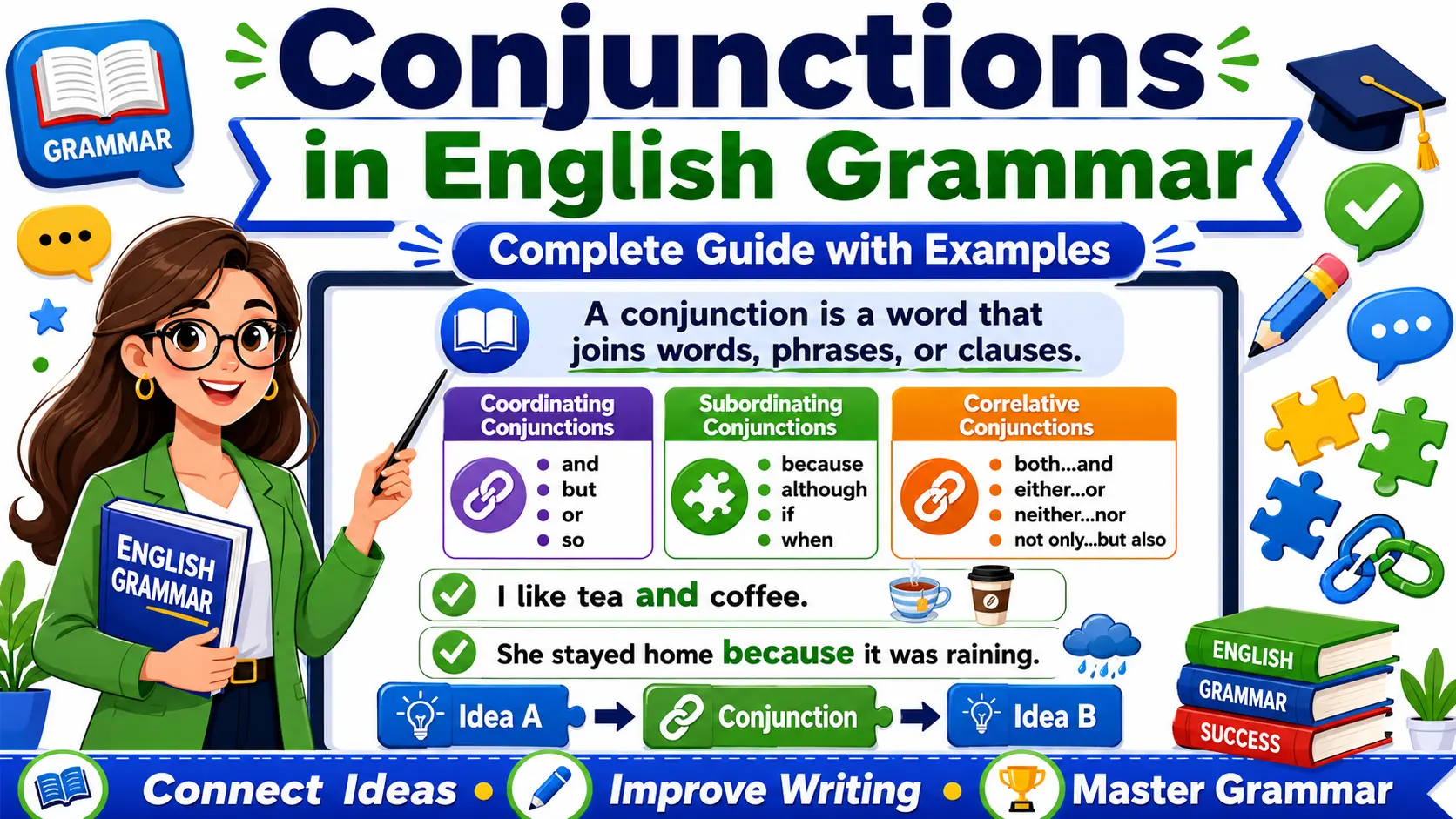
Introduction to Conjunctions in English Grammar Think of conjunctions as the unsung heroes of smooth communication. Without them, our speech and writing would feel incredibly choppy—like a robot reading a dry list of facts. In this guide, we are going to break down exactly how these little words act as bridges between your thoughts, making…
-
Active Voice vs. Passive Voice: The Secret to Stronger Sentences
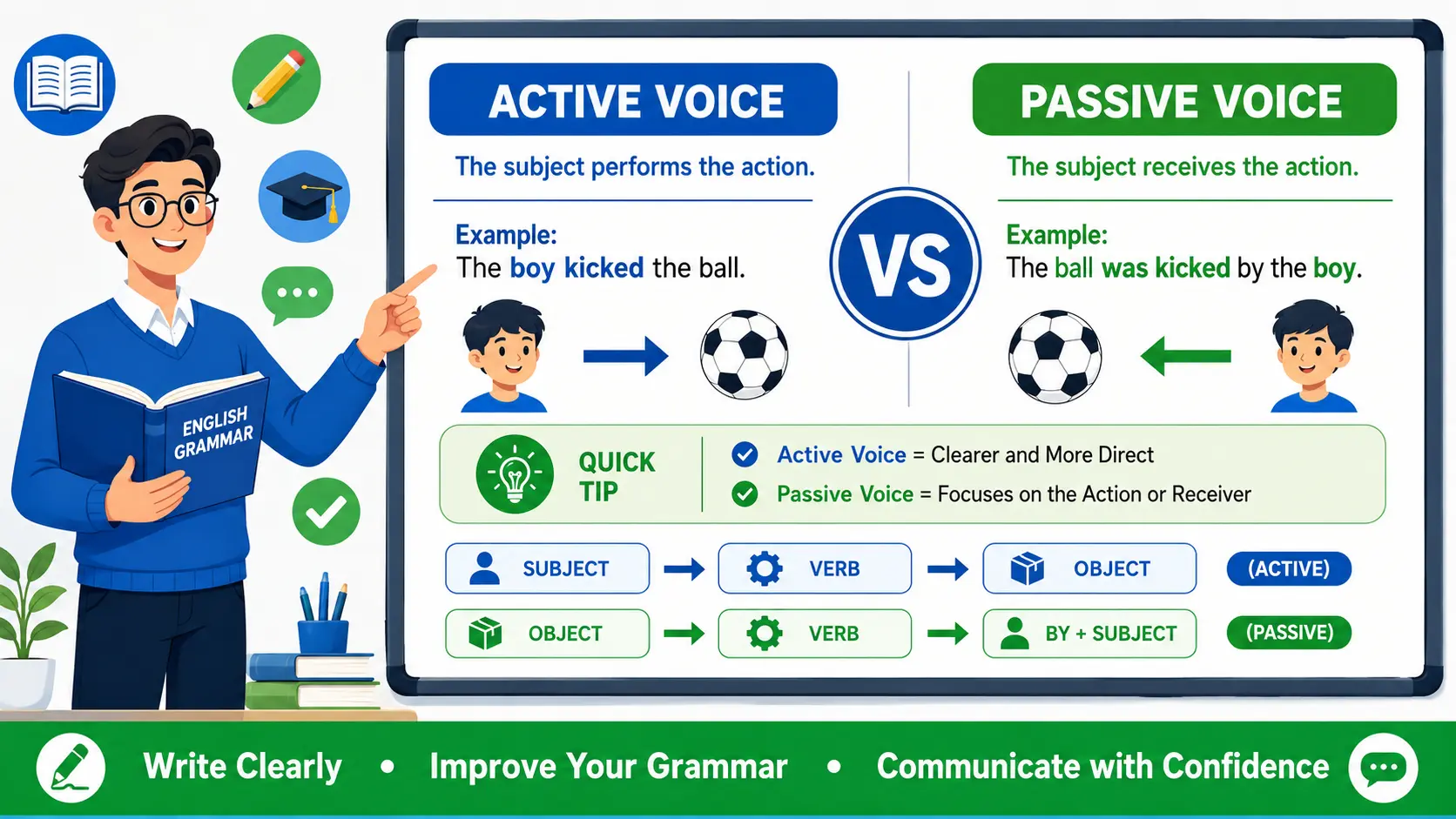
Active voice vs. passive voice is one of those grammar topics that sounds incredibly intimidating—like something straight out of a dusty textbook. But in reality, it’s just about energy and focus. Understanding the difference isn’t just about passing a grammar test; it is the ultimate secret weapon for making your writing clearer, more punchy, and…
-
Simple Present Tense Rules (With Examples & Easy Guide)
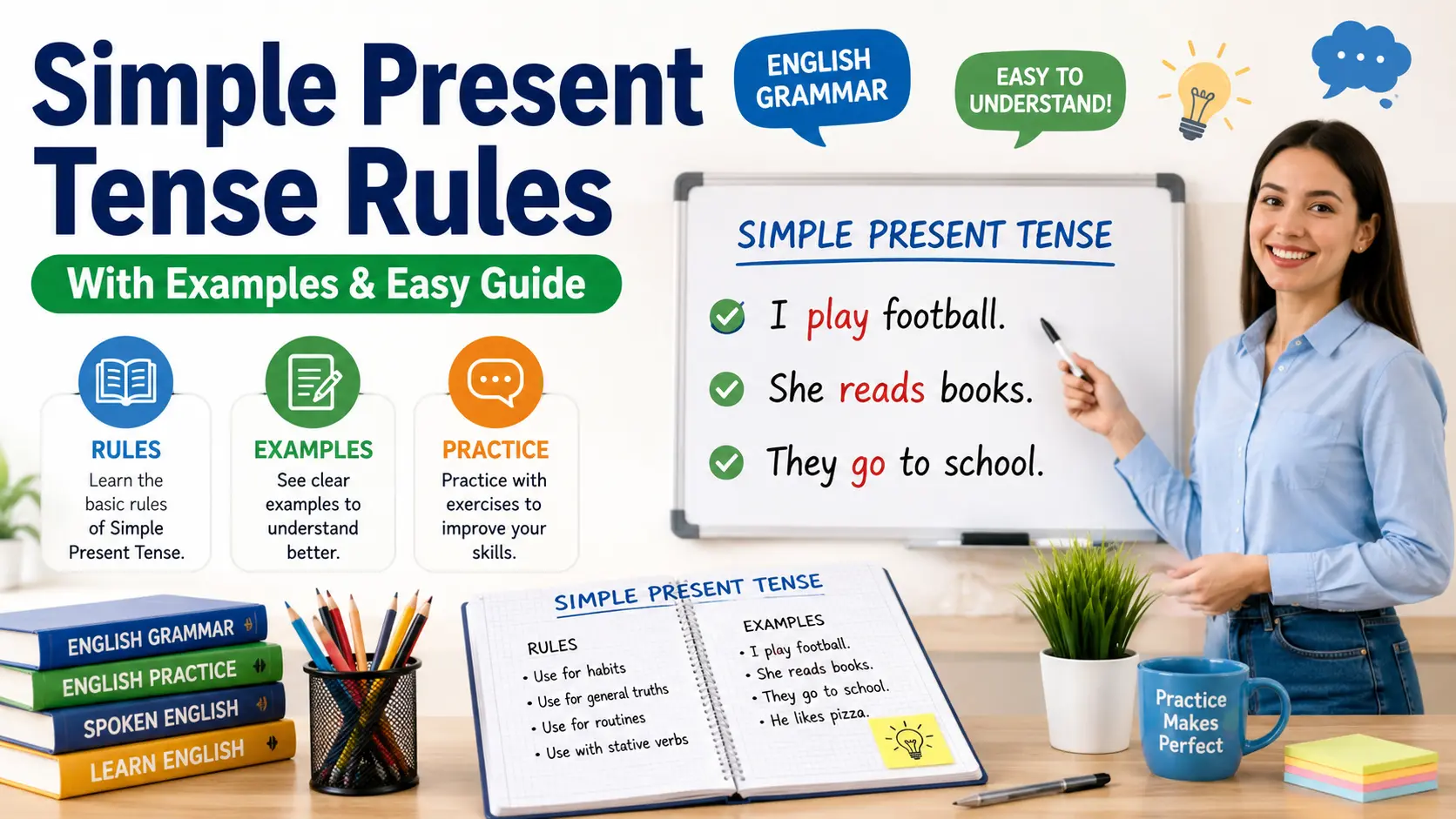
The simple present tense rules are one of the most important parts of English grammar. They help you describe habits, general truths, and daily actions clearly and correctly. By learning the simple present tense rules, you can speak and write English more clearly and confidently. Let’s be honest: grammar rules can sometimes feel like a…
-
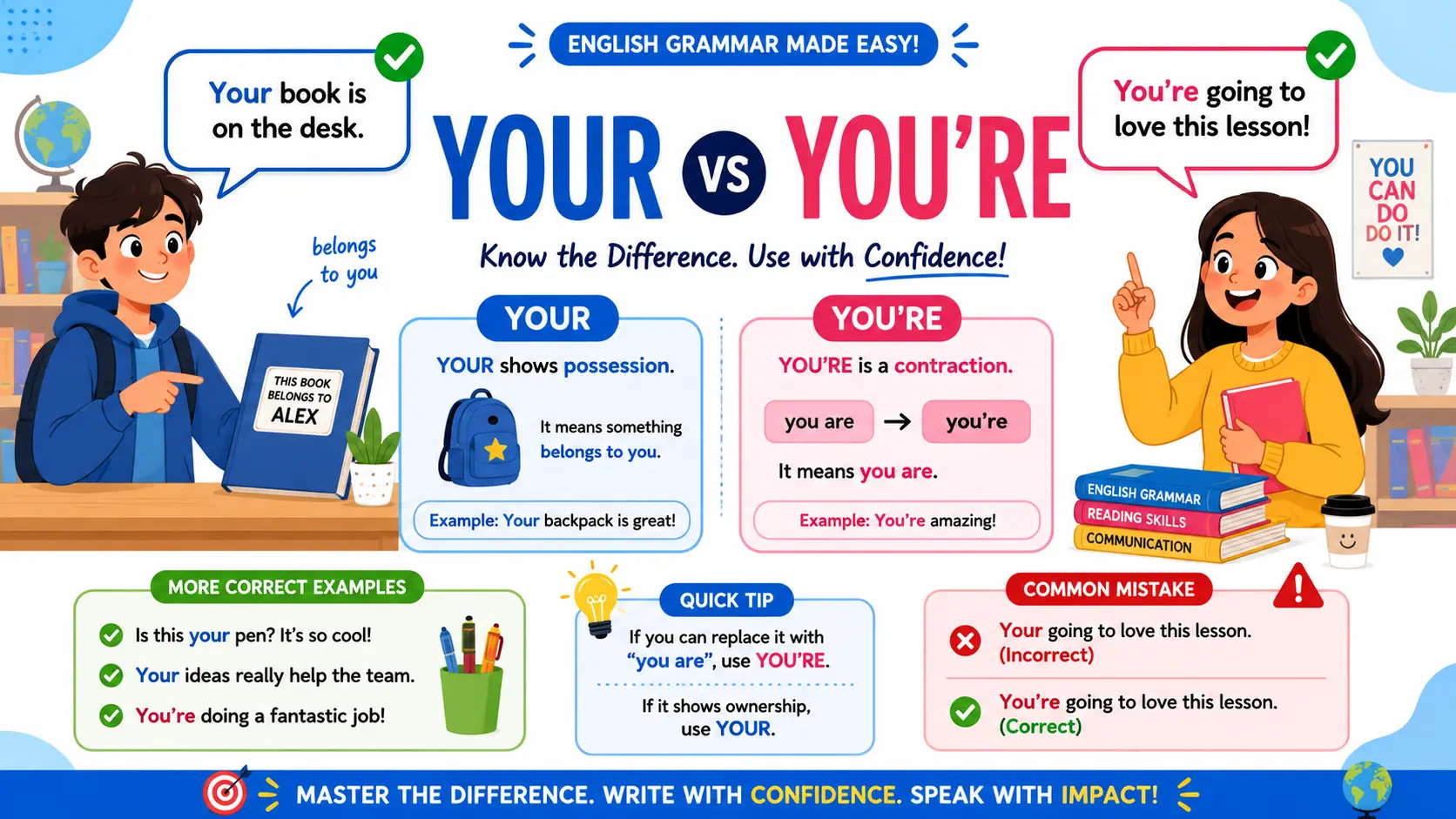
Your vs You’re: What’s the Difference?
Your vs you’re is one of the most common grammar mistakes in English. Many learners confuse these words because they sound the same when spoken. However, your and you’re have completely different meanings and uses. Understanding the difference between your vs you’re will help you write more clearly and avoid common errors. To be completely…
-
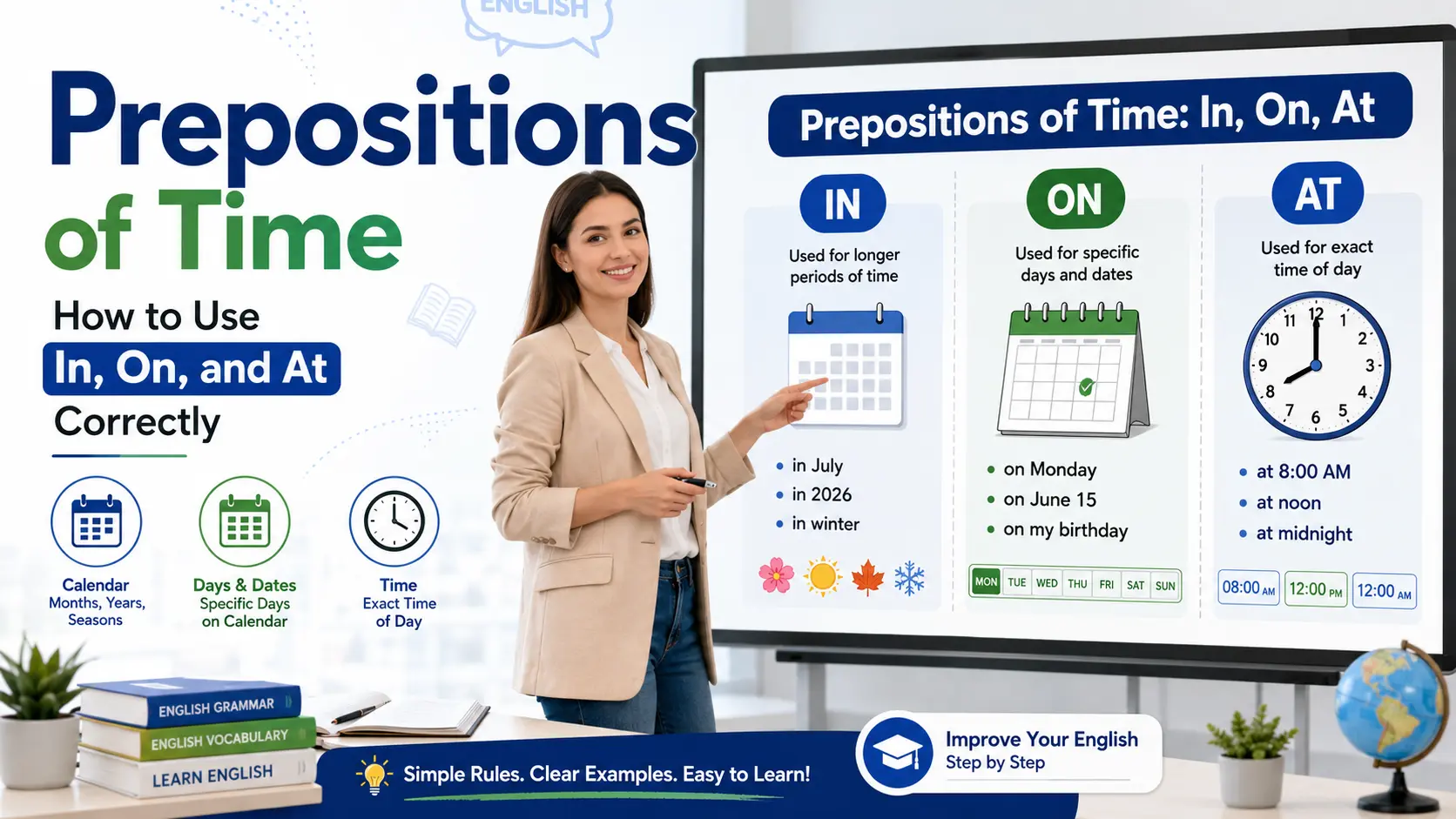
Prepositions of Time: In, On, At
Prepositions of time serve as time markers in English grammar. They establish temporal relationships between the action (verb) and a specific point in time, allowing your reader or listener to anchor events accurately on a timeline. Without prepositions of time, telling stories, setting appointments, or detailing historical sequences would become disjointed and confusing. Understanding these…