English Tenses in Grammar
English tenses are one of the most important parts of any English grammar guide.
They help you describe when an action happens — in the present, past, or future.
In this complete guide to English tenses, you’ll learn:
- The 12 main tenses
- When to use each tense
- Clear examples for easy understanding
🎁 Try a Free Grammar Worksheet (See How It Works)
Want to practise English grammar with instant feedback?
👉 🎁 Download Free Grammar Worksheet Sample
[Get Free Sample]
✔ Simple exercises
✔ Instant AutoTick answers
🧠 What Are English Tenses in Grammar?
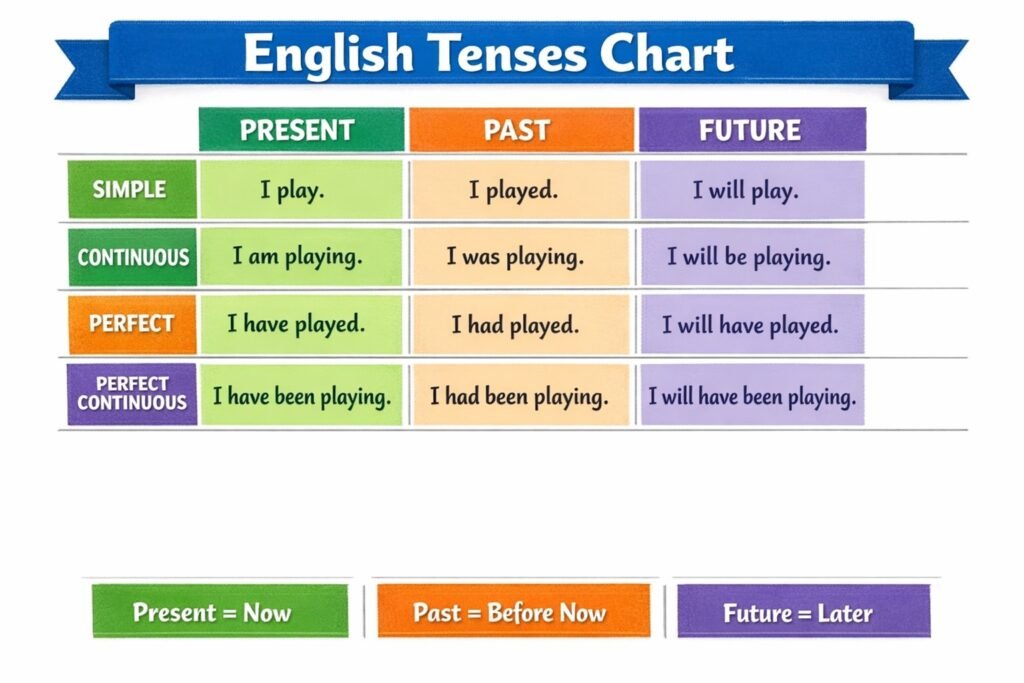
English tenses describe the time of an action or event.
They tell us whether something:
- Happens now (present)
- Happened before (past)
- Will happen later (future)
Learning tenses helps you:
- Speak more clearly
- Write correctly
- Avoid common grammar mistakes
📚 The 3 Main Types of Tenses
English grammar includes 12 main tenses, grouped into:
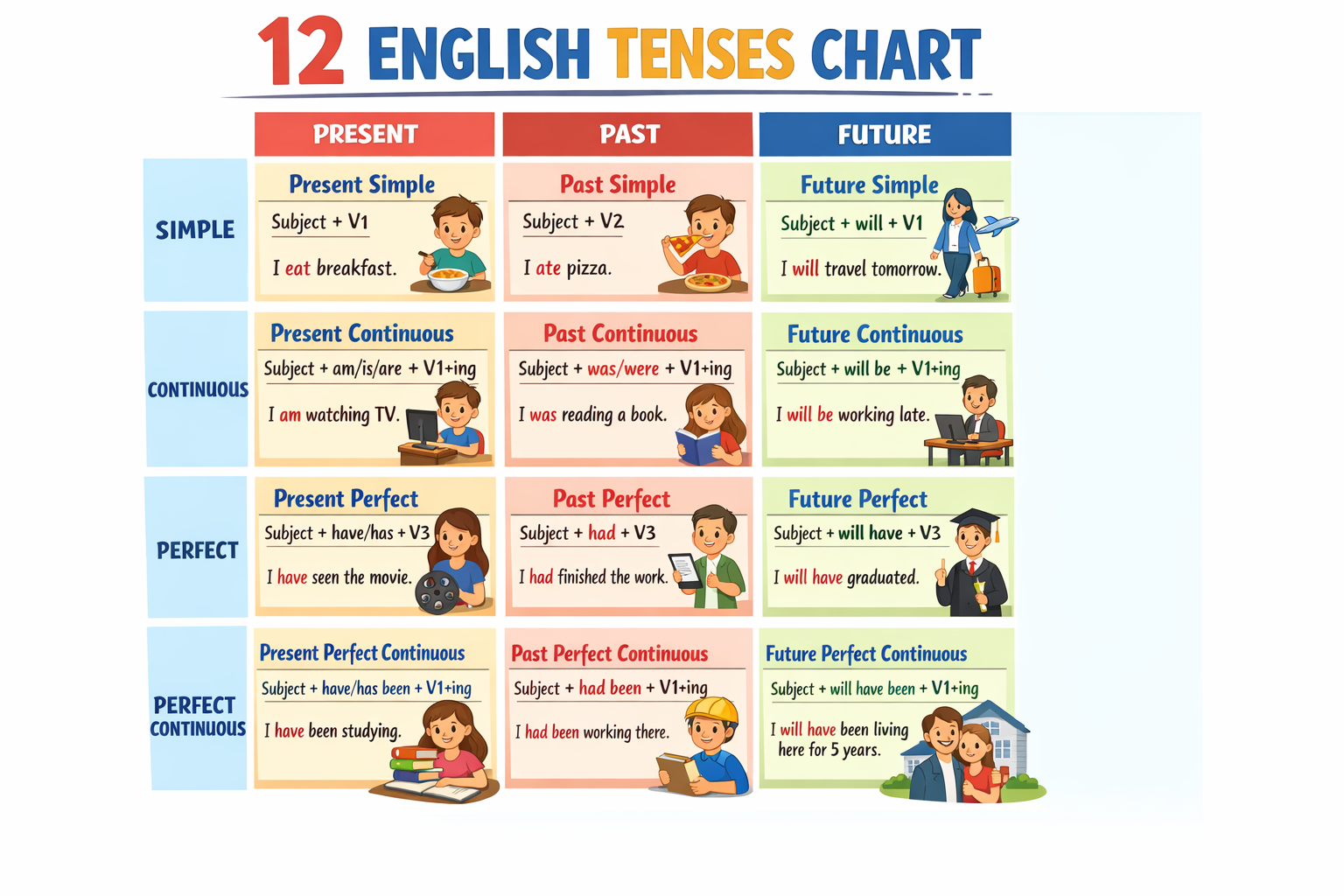
- Present Tenses
- Past Tenses
- Future Tenses
🔵 Present Tenses
Present tenses describe actions happening now or regularly.
✅ Simple Present Tense
Used for habits, facts, and general truths.
Examples:
- She reads every day.
- The sun rises in the east.
👉 Learn more: /simple-present-tense/
🔄 Present Continuous Tense
Used for actions happening right now.
Examples:
- She is reading a book.
- They are playing outside.
👉 Learn more: /present-continuous-tense/
✔ Present Perfect Tense
Connects past actions to the present.
Examples:
- She has finished her homework.
- I have visited London.
👉 Learn more: /present-perfect-tense/
⏳ Present Perfect Continuous Tense
Describes actions that started in the past and continue now.
Example:
- She has been studying for two hours.
👉 Learn more: /present-perfect-continuous-tense/
🟡 Past Tenses
Past tenses describe actions that already happened.
✅ Simple Past Tense
Used for completed past actions.
Examples:
- She finished her homework yesterday.
- They played football last weekend.
👉 Learn more: /simple-past-tense/
🔄 Past Continuous Tense
Describes actions in progress in the past.
Example:
- She was reading when I called.
👉 Learn more: /past-continuous-tense/
✔ Past Perfect Tense
Describes an action before another past action.
Example:
- She had finished her homework before dinner.
👉 Learn more: /past-perfect-tense/
⏳ Past Perfect Continuous Tense
Describes ongoing past actions before another event.
Example:
- She had been studying for three hours before the exam.
👉 Learn more: /past-perfect-continuous-tense/
🔴 Future Tenses
Future tenses describe actions that will happen later.
✅ Simple Future Tense
Describes future actions.
Examples:
- She will study tonight.
- They will travel next week.
👉 Learn more: /simple-future-tense/
🔄 Future Continuous Tense
Describes actions happening at a future time.
Example:
- She will be studying at 8 p.m.
👉 Learn more: /future-continuous-tense/
✔ Future Perfect Tense
Describes completed future actions.
Example:
- She will have finished her homework by tonight.
👉 Learn more: /future-perfect-tense/
⏳ Future Perfect Continuous Tense
Describes ongoing future actions.
Example:
- She will have been studying for three hours by 9 p.m.
👉 Learn more: /future-perfect-continuous-tense/
🚀 Practise English Tenses (Improve Faster)
Understanding is good — but practice is what makes you fluent.
👉 🚀 Get English Grammar Worksheets (Levels 1–6)
[Download Worksheets]
✔ Covers all tenses
✔ Step-by-step difficulty
✔ Instant AutoTick answers
🎁 Not Ready Yet? Try the Free Sample
👉 🎁 Download Free Sample Worksheets
📈 Why Learning English Tenses Is Important
When you understand English tenses, you can:
- Describe actions clearly
- Avoid confusing sentences
- Improve speaking and writing
- Build confidence in English
🔗 Related Grammar Topics
To improve faster, also learn:
🌍 Trusted Grammar Resources
For additional reference, you can visit:
🚀 Final Tip
Don’t try to learn all 12 tenses at once.
👉 Learn step by step
👉 Practise daily
👉 Use real examples
You will improve faster than you think.
❓ Frequently Asked Questions
What are English tenses?
English tenses show the time of an action — past, present, or future.
How many tenses are there in English?
There are 12 main tenses in traditional English grammar.
Which tense should I learn first?
Start with the simple present and simple past tense.
Why are tenses important?
Tenses help make your sentences clear and meaningful.
What is the easiest way to learn tenses?
Practice with examples and use worksheets with instant feedback.